
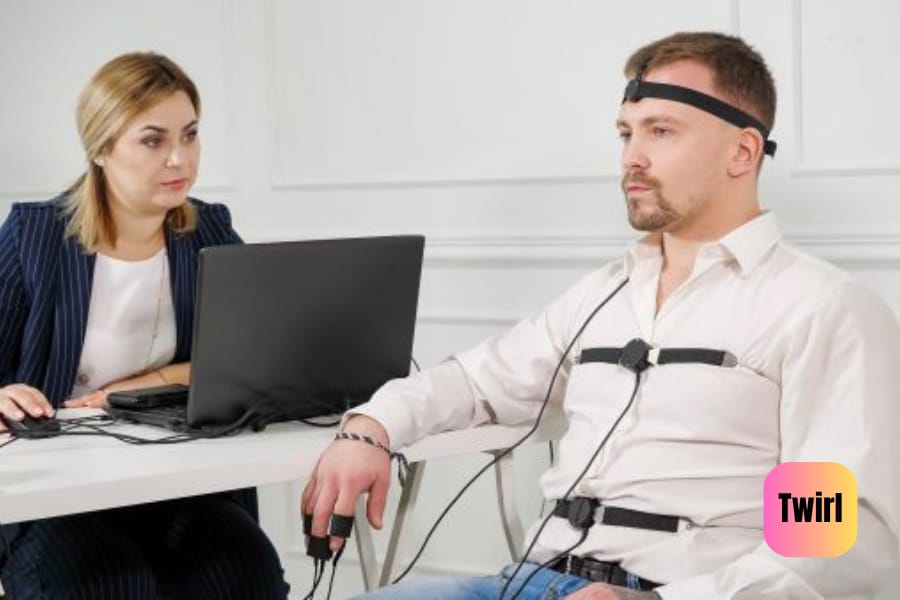

You’ve probably seen them in movies—someone sweating under bright lights, electrodes strapped to their chest and fingers, a machine humming as a detective asks a single question: “Did you do it?” The needle jumps, the tension spikes, and somehow, the truth is supposed to come out. That’s the dramatic image of a polygraph test. But let’s be honest, reality is a little messier.
I remember the first time I saw a polygraph in action. It wasn’t on TV; it was in a small, windowless office where a friend of mine had to go through it for a job. The examiner was calm, friendly even, but the equipment looked intimidating. There were straps, rubber tubes, wires, and a monitor that made me feel like I’d stepped into a sci-fi lab. My friend later told me the questions seemed simple at first—“Have you ever lied on a resume?”—but the tension in the room made each one feel like a life-or-death confession.
That’s one of the things about polygraph tests: they’re as much psychological as they are technical. They don’t actually read your mind. They measure physiological responses that might indicate stress or deception—things like heart rate, blood pressure, respiration, and skin conductivity. The theory is simple: when people lie, their body reacts in subtle ways, even if they don’t realize it. But here’s the thing—stress isn’t exclusive to lying. Anxiety, fear, or even being in a room with someone watching you can trigger similar responses.
How a Polygraph Test Feels
If you’ve never taken one, imagine sitting in a chair with someone explaining that you’re about to be monitored closely while you answer questions. Electrodes are clipped to your fingers, a belt is wrapped around your chest, and small tubes might circle your body to track breathing. Then there’s the pre-test phase, which can feel longer than the actual test. The examiner will go over your personal history, explain the questions, and often practice asking neutral questions like, “Is your name John?”—even if it’s not. The goal is to establish a baseline for your normal responses.
During the real test, the questions get sharper, more pointed. You might hear things like, “Have you ever stolen from an employer?” or “Did you take the missing files?” Your body tenses, your pulse quickens, maybe your hands sweat. The polygraph doesn’t “know” if you’re lying; it records your physiological spikes. The examiner then interprets the data, looking for patterns that suggest deception.
Can They Really Detect Lies?
Here’s where things get tricky. Polygraphs are often called “lie detectors,” but that’s a bit misleading. They detect physiological reactions, not lies themselves. People can lie and remain calm, or tell the truth and get nervous. Think about a teenager hiding a report card from their parents—sweaty palms, shallow breathing, racing heart—but they didn’t actually lie about anything important. Conversely, someone with training in controlling stress responses might bluff perfectly under the polygraph.
Research shows that polygraphs aren’t 100% reliable. Accuracy rates vary widely depending on the type of test, the examiner’s skill, and the person being tested. Some studies suggest a success rate of around 70–90% in controlled environments. That sounds high, but in real life, that margin can make a huge difference—especially if someone’s job, freedom, or reputation is on the line.
The Human Factor
Much of the polygraph’s power comes from the examiner rather than the machine. A skilled examiner can notice tiny cues, like hesitation before answering or changes in voice. They also ask “control questions” designed to provoke a response, helping to differentiate nervousness from deceit.
I once talked to a retired polygraph examiner who said the machine was just one part of the puzzle. “The wires don’t tell you the story,” he explained. “People do.” He emphasized rapport, observation, and intuition as much as the technical data. That human element is why two different examiners can sometimes interpret the same polygraph results differently.
Common Myths
Let’s clear up a few things that often get exaggerated:
- Myth: Polygraphs can read your mind. No, they can’t. They read your body. Big difference.
- Myth: You can’t beat a polygraph. Some people can manage their physiological responses, but it’s not foolproof.
- Myth: Polygraphs are universally admissible in court. In reality, most courts treat polygraph results with caution, if they allow them at all.
People often assume the machine itself is magical, but it’s more like a very sensitive alarm system. It signals potential stress that could be linked to deception, but context is everything.
Why People Take Them
Despite the limitations, polygraphs are still widely used. Law enforcement, government jobs, and security clearances often require them. Some private companies use them too, though that’s less common.
Why? Partly, it’s the deterrent effect. Knowing that someone might have to sit through a polygraph can discourage dishonesty. There’s also a psychological component: the test can make people more forthcoming, simply because they feel watched and evaluated.
I’ve spoken to someone who took a polygraph for a security clearance. She described feeling an odd mix of anxiety and accountability. “I wasn’t lying about anything,” she said, “but just being in that room made me feel like every thought was under a microscope.” That’s the subtle pressure at play—sometimes that alone is enough to get people to be more honest.
Preparing for a Polygraph
Here’s the reality: there’s no magic trick that guarantees you’ll “pass.” The best approach is honesty and calm. Examiners often recommend basic strategies like:
- Get a good night’s sleep. Fatigue can exaggerate physiological responses.
- Eat lightly and stay hydrated. A queasy stomach or dehydration can skew results.
- Answer questions truthfully. It’s hard to fake a physiological baseline over a long session.
Some people try breathing techniques or mental exercises to stay calm. That can help, but trying to “trick” the machine is risky and rarely reliable.
The Bigger Picture
Polygraphs are fascinating because they sit at the intersection of science, psychology, and human intuition. They’re not perfect, and they’re not mystical. But they do reveal something real about human behavior: lying is stressful, and being evaluated is stressful, even when you’re telling the truth.
Here’s a little scenario to illustrate: imagine a coworker borrowed a stapler without asking. You ask them about it during a polygraph. They deny taking it, but their palms sweat. Did they lie? Maybe—they might also just hate confrontation. That ambiguity is why polygraphs are only one piece of a bigger puzzle.
They also remind us of the power of observation. Machines can record data, but humans interpret meaning. That’s true in polygraphs and in life. Sometimes, it’s not the needle on the paper that tells the story, but how someone behaves in the moments around it.
Final Thoughts
Polygraph tests are more than just “lie detectors.” They’re tools that measure stress, anxiety, and human reaction. They’re imperfect, sometimes controversial, but undeniably interesting. Sitting through one—or even just learning how they work—gives you a glimpse into how our bodies betray us, even when we think we’re hiding the truth.
At the end of the day, the takeaway isn’t whether the machine can catch a lie. It’s that honesty and calm often matter more than any electrode or monitor. And if you ever find yourself in that chair, take a deep breath, relax your shoulders, and remember: it’s mostly about human behavior, not magic.
Start Exploring Twirl N Shape — Endless Inspiration Ahead