
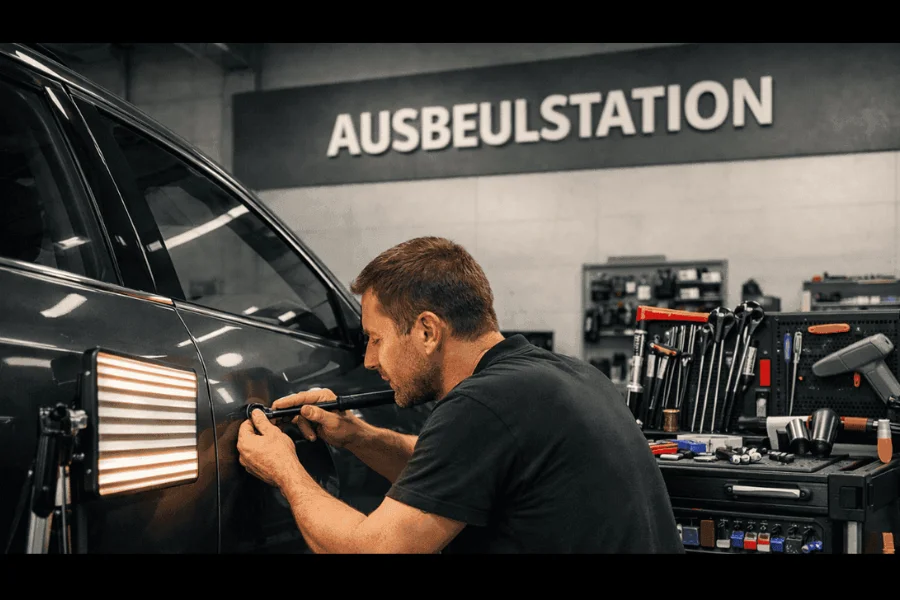

A small dent on your car can feel frustrating. Maybe it came from a parking lot bump or a sudden hailstorm. The good news is that many dents can be fixed without sanding, filler, or repainting. That’s where an Ausbeulstation comes in. An Ausbeulstation is a specialized setup used for paintless dent repair (PDR). Instead of covering damage with paint, it carefully pushes or pulls the metal back into its original shape. When done correctly, the dent disappears and the factory paint stays untouched.
This method has become popular in modern auto repair shops. It’s faster than traditional bodywork, often cheaper for customers, and better for the environment. If you’re curious about how dent repair works—or you’re thinking about setting up a workshop—this guide will walk you through the essentials. You’ll learn how an Ausbeulstation works, which tools are used, and when paintless dent repair is the right solution.
What an Ausbeulstation Is and Why It Matters in Dent Repair
An Ausbeulstation is a dedicated workstation used in auto repair shops to remove dents from vehicle panels without repainting them. Instead of sanding the surface, adding body filler, and applying new paint, technicians use specialized tools to gently reshape the metal from its damaged position back to its original form. The goal is simple: fix the dent while keeping the factory paint untouched.
This approach is part of a technique known as paintless dent repair (PDR). PDR has become widely used because it allows technicians to repair dents faster and with fewer materials than traditional methods. A typical Ausbeulstation includes tools such as dent rods, glue pulling kits, knockdown tools, and LED reflection lights that help technicians see even the smallest surface distortions.
Modern repair shops value these workstations because they create a controlled environment for precision work. With proper lighting and organized tools, technicians can carefully analyze dents and adjust the metal with small, controlled movements. This improves both speed and accuracy during repairs.
The importance of an Ausbeulstation has grown as car owners increasingly want repairs that protect the original finish of their vehicles. Factory paint is applied under highly controlled conditions, and maintaining it can help preserve a vehicle’s value. By restoring metal instead of covering damage, paintless dent repair supports this goal while also making repairs faster and more efficient.
The basic idea behind paintless dent repair (PDR)
Paintless dent repair works on a simple but powerful principle: if the metal and paint are still intact, the dent can often be reshaped instead of replaced or repainted. Vehicle panels are made from flexible metal that can move slightly when pressure is applied. When a dent occurs, the metal bends inward, but in many cases it can be pushed back to its original position.
A useful way to imagine this is by thinking about a soda can. If the can is lightly pressed and forms a small dent, it may be possible to push it back from the inside and restore its shape. The same concept applies to automotive panels, although vehicle metal is thicker and requires more precise tools.
Technicians performing paintless dent repair use specially designed rods, picks, and leverage tools to push the dent outward from behind the panel. In areas where the backside of the panel cannot be reached, glue pulling tools may be used to pull the dent outward from the surface. The process requires patience and careful adjustments because applying too much force can stretch the metal or damage the paint.
Industry discussions in publications like Forbes and Search Engine Journal highlight how modern repair trends increasingly emphasize restoring original components instead of replacing them. Paintless dent repair follows that philosophy by preserving the vehicle’s factory finish while correcting surface damage. This method works best on small to medium dents where the paint surface remains undamaged and the metal has not been severely stretched.
How an Ausbeulstation fits into modern auto body work
Modern vehicles are built with complex panel shapes, lightweight metals, and durable factory paint finishes. Because of this, repair methods have evolved as well. An Ausbeulstation provides a specialized environment where technicians can perform precise dent repairs without affecting the original paint or structural integrity of the vehicle.
In a professional workshop, the Ausbeulstation usually includes adjustable stands, high-quality LED reflection lighting, dent rods, and glue pulling systems. These tools are arranged so technicians can easily reach damaged areas and analyze surface distortions. The lighting is particularly important because it creates reflections across the panel that make dents easier to detect and repair accurately.
Auto body shops rely on this setup because it improves efficiency. Traditional dent repair may involve sanding, filling, priming, and repainting a panel, which can take several days.This faster turnaround benefits both repair businesses and customers.
The approach also fits well with modern expectations in the automotive industry. Car owners want quick repairs that maintain the appearance and value of their vehicles. Insurance companies often prefer repair methods that reduce costs and labor time. By allowing technicians to restore panels instead of replacing them, an Ausbeulstation helps meet these expectations. As a result, many professional repair shops now consider an Ausbeulstation an essential part of their workflow.
Common situations where these systems are used
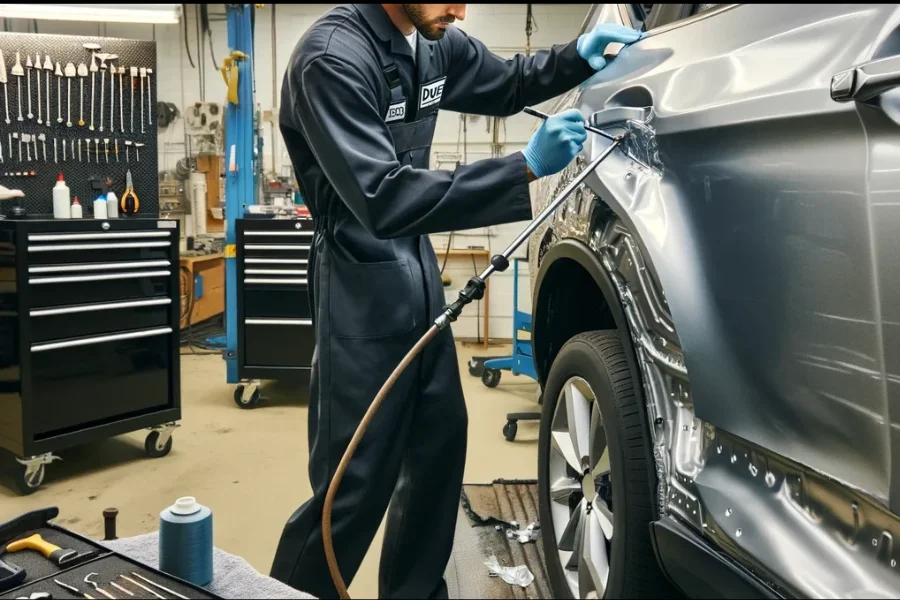
Paintless dent repair systems are designed to handle many of the most common types of vehicle damage. Everyday situations can easily create dents in car panels, and an Ausbeulstation provides an efficient way to repair them without extensive bodywork.
One of the most common examples is hail damage. During severe storms, hailstones can strike a vehicle multiple times, leaving dozens of small dents across the roof, hood, and trunk. Repairing these dents using traditional methods would require extensive sanding and repainting. With paintless dent repair tools, technicians can remove each dent individually while preserving the original paint.
Another typical situation involves parking lot damage. When someone accidentally opens a car door into another vehicle, it often leaves a small indentation on the panel. These dents are usually shallow and do not damage the paint, making them ideal candidates for paintless dent repair. Many of these repairs can be completed within an hour.
Minor collision dents are also common repair cases. Low-speed impacts may create small dents in doors or fenders without affecting the paint surface. In these cases, an Ausbeulstation allows technicians to carefully reshape the panel and restore its appearance. However, this repair method works best when the paint is still intact. If the paint is cracked or the metal is severely stretched, traditional repair methods may still be necessary.
How Paintless Dent Repair Works Step by Step
Paintless dent repair (PDR) may look simple when you watch a skilled technician work. A dent slowly disappears, and the panel looks smooth again. But behind that result is a careful step-by-step process. Each stage is designed to reshape the metal while protecting the paint on the surface.
Unlike traditional body repair, PDR does not rely on sanding, filler, or repainting. Instead, technicians focus on understanding how the metal moved when the dent happened. They then guide it back into its original position using small, controlled adjustments. This method takes patience and attention to detail.
A typical repair starts with careful inspection. The technician studies the dent under special lighting to understand its depth and shape. Next comes the repair itself. Depending on access to the panel, the dent may be pushed from behind the metal or gently pulled from the outside using glue tools.
Once the dent is mostly removed, the technician begins the finishing stage. Tiny high spots and uneven areas are corrected with light tapping tools. Special reflection lights help reveal even the smallest surface distortions so the panel can be refined until it looks perfectly smooth.
Many professionals say paintless dent repair is a mix of science and craftsmanship. The tools provide leverage and control, but the technician’s experience determines how the metal responds. When the process is done correctly, the dent disappears and the vehicle keeps its original paint finish.
Inspecting the dent and choosing the right method
Every paintless dent repair begins with a careful inspection of the damaged area. This step may seem simple, but it is one of the most important parts of the entire process. Before touching the panel with any tools, the technician must fully understand what happened to the metal.
The first thing technicians examine is the size and depth of the dent. Small shallow dents behave very differently from deeper or sharper ones. The location of the dent also matters. A dent on a flat door panel is usually easier to repair than one on a curved body line or near a panel edge.
Another key factor is the condition of the paint. Paintless dent repair works best when the original paint surface is still intact. If the paint is cracked, chipped, or already damaged, the repair may require traditional body work instead.
Technicians often use LED reflection lights or reflection boards during this stage. These tools create patterns of light across the panel. When the metal is dented, the lines in the reflection appear distorted. This makes it easier to see exactly where the metal is pushed inward or outward.
After studying the dent, the technician chooses the best repair approach. If the backside of the panel can be reached, pushing tools may be used. If access is blocked, glue pulling methods may be a better option. Choosing the correct technique at this stage helps ensure the repair remains safe, accurate, and effective.
Pushing dents from behind the panel
When technicians can reach the backside of a vehicle panel, they often use a technique known as metal pushing. This method is one of the most precise ways to perform paintless dent repair because it allows direct control over the damaged metal.
The technician inserts a specialized dent rod behind the panel. These rods come in many shapes and sizes so they can reach tight spaces inside doors, fenders, and quarter panels. Once the tool is positioned correctly, gentle pressure is applied to the backside of the dent.
Instead of forcing the dent out in one movement, the technician makes many small adjustments. Each push slightly reshapes the metal, slowly guiding it back toward its original position. This careful approach helps prevent overstretching the metal or damaging the paint layer.
Lighting plays a crucial role during this process. Reflection boards or LED lights are placed near the panel to create visible lines across the surface. As the technician pushes the metal, these lines change shape. By watching the reflections, the technician can see exactly where more pressure is needed.
Experienced technicians often describe this process as “massaging the metal.” It requires patience and precision rather than strength. With the right technique, even dents that seem noticeable at first can gradually disappear. When done correctly, the panel can look completely smooth again without any repainting.
Using glue-pulling techniques from the outside
Sometimes the backside of a dent cannot be reached with rods or pushing tools. Many vehicle panels contain structural supports, insulation, or reinforcement that block access. In these situations, technicians use glue pulling, another important technique in paintless dent repair.
Glue pulling works from the outside of the panel. A small plastic tab is attached directly to the dent using a strong but removable adhesive. After the glue hardens, a specialized pulling tool connects to the tab and gently lifts the dent outward.
The key to this method is controlled pulling. The technician applies steady pressure rather than sudden force. This allows the metal to move gradually back into its original position without stressing the paint surface.
Once the dent begins to rise, the glue tab is removed using a special solution that breaks down the adhesive without damaging the paint. At this stage, the panel is often close to its correct shape, but small imperfections may still remain.
Glue pulling is particularly useful for hail damage or wide shallow dents where many small dents appear across a panel. Technicians can attach multiple tabs and repair several dents efficiently. Although the process looks simple, it still requires careful judgment and experience to avoid pulling the metal too far outward. When used correctly, glue pulling allows technicians to repair dents even when the backside of the panel is impossible to reach.
Key Tools and Equipment in an Ausbeulstation Setup
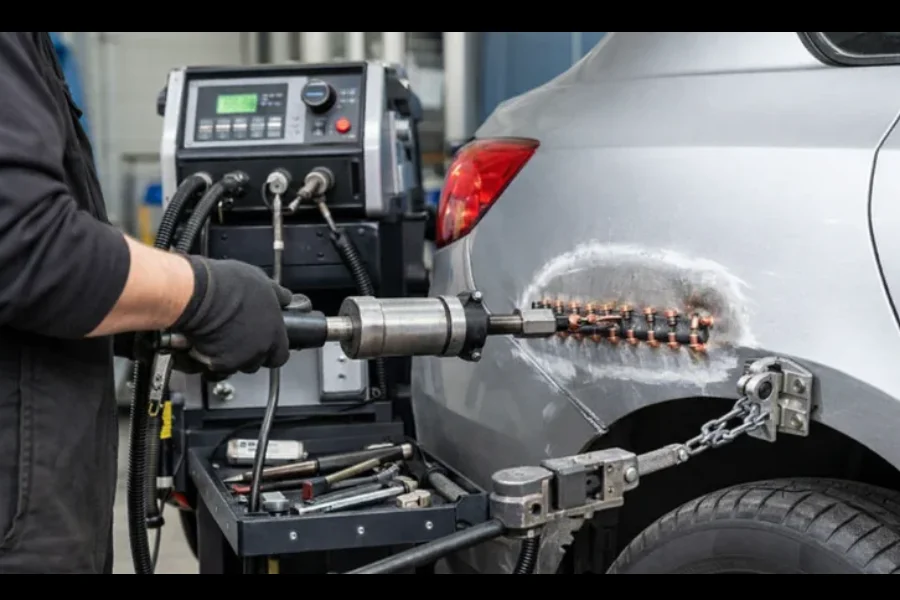
An Ausbeulstation is more than just a workspace for removing dents. It is a carefully organized environment where specialized tools help technicians reshape vehicle panels with precision. Unlike traditional body repair shops that rely heavily on sanding, fillers, and repainting, an Ausbeulstation focuses on restoring the metal to its original shape while keeping the factory paint intact.
To make this possible, technicians use a range of tools designed specifically for paintless dent repair (PDR). Each piece of equipment serves a different purpose. Some tools push the metal from behind the panel, while others gently pull dents from the outside when access is limited. Finishing tools help smooth small imperfections, and specialized lighting systems reveal even the smallest distortions in the surface.
What makes these tools effective is not just their design but how they work together. A technician might begin with inspection lighting, choose the correct rod for pushing the dent, switch to a glue pulling system if access is limited, and finish the repair with knockdown tools for fine adjustments.
Experience also plays a major role. Skilled technicians learn which tools to use for specific dent types, panel locations, and metal thickness. The right combination of tools, technique, and patience allows an Ausbeulstation to restore damaged panels with remarkable accuracy. Understanding the main tools used in this setup helps explain why paintless dent repair can deliver such clean and precise results.
Dent Rods and Leverage Tools
Dent rods are among the most essential tools used in an Ausbeulstation. These long, slender metal tools allow technicians to reach behind vehicle panels and slowly push dents back into shape. While they may appear simple at first glance, dent rods come in a wide variety of designs that help technicians work in tight or awkward spaces inside a car’s body panels.
Each rod has a specific shape, length, and tip style. Some rods have rounded ends that apply soft, controlled pressure to the metal. Others feature sharper or more pointed tips designed for very precise adjustments. This variety allows technicians to work on different parts of the vehicle, such as doors, roof panels, fenders, and quarter panels.
Access is a key part of the process. Technicians often insert rods through existing openings in the vehicle, such as window gaps, factory access holes, or small panel openings. Once the rod is positioned behind the dent, leverage becomes important. The technician uses nearby structures or specialized braces to carefully apply pressure and guide the metal back to its original position.
The repair process involves many small movements rather than one strong push. Each gentle adjustment gradually reshapes the panel. Reflection lighting helps the technician see how the metal responds to each movement, allowing them to correct the dent with precision.
Because every dent behaves differently, choosing the right rod and the correct angle requires both training and experience. Skilled technicians often develop a strong sense of how much pressure to apply and where to apply it.
Glue Pulling Kits and Tabs
Not every dent can be repaired from behind the panel. Some areas of a vehicle are blocked by structural reinforcements or internal components, making it impossible to reach the backside of the metal. In these situations, technicians rely on glue pulling systems to repair the dent from the outside.
Glue pulling kits are designed specifically for paintless dent repair and include several components. These usually consist of adhesive sticks, plastic pulling tabs, and specialized pulling tools. The technician selects a tab that closely matches the size and shape of the dent. This tab is then attached to the damaged area using a strong but removable hot adhesive.
Once the adhesive has cooled and bonded with the surface, a pulling tool is connected to the tab. The technician then applies controlled pulling force to gently lift the dent outward. Just like pushing with rods, this process requires patience and precision. Pulling too aggressively can create high spots or distort the metal further.
After the dent rises back toward its original shape, the glue tab is carefully removed. Technicians typically use alcohol or a dedicated release solution that dissolves the adhesive without affecting the vehicle’s paint. Any remaining glue is cleaned from the surface.
Glue pulling works especially well for shallow dents and larger damaged areas, such as hail damage across roofs or hoods. It allows technicians to repair panels that would otherwise be very difficult to reach from behind.
Knockdown Tools and Finishing Hammers
After a dent has been pushed or pulled close to its original position, the repair is not always completely finished. Small high spots or minor imperfections may still remain on the panel surface. These subtle irregularities are often invisible to the naked eye in normal lighting but become noticeable under inspection lights.
Knockdown tools are used to correct these small imperfections. These tools are designed to gently tap down raised areas in the metal so the panel returns to its natural contour. Most knockdown tools feature tips made from plastic, nylon, or polished metal. These materials help prevent scratches or damage to the vehicle’s paint during the finishing process.
Technicians usually combine knockdown tools with lightweight hammers. The hammer delivers controlled taps to the knockdown tip, allowing the technician to carefully lower high spots without affecting the surrounding area. This process requires a delicate touch. Even small taps can change the shape of the metal, so precision is essential.
Throughout this stage, technicians continue using reflection lighting to monitor their progress. The lighting patterns reveal how the panel surface changes after each adjustment. If a high spot disappears but a low area appears nearby, the technician may switch tools and repeat the process until the surface looks perfectly smooth. Many experienced technicians say that finishing work takes as much attention as the initial dent removal. The final result depends on how carefully these small details are handled.
LED Reflection Lights and Inspection Boards
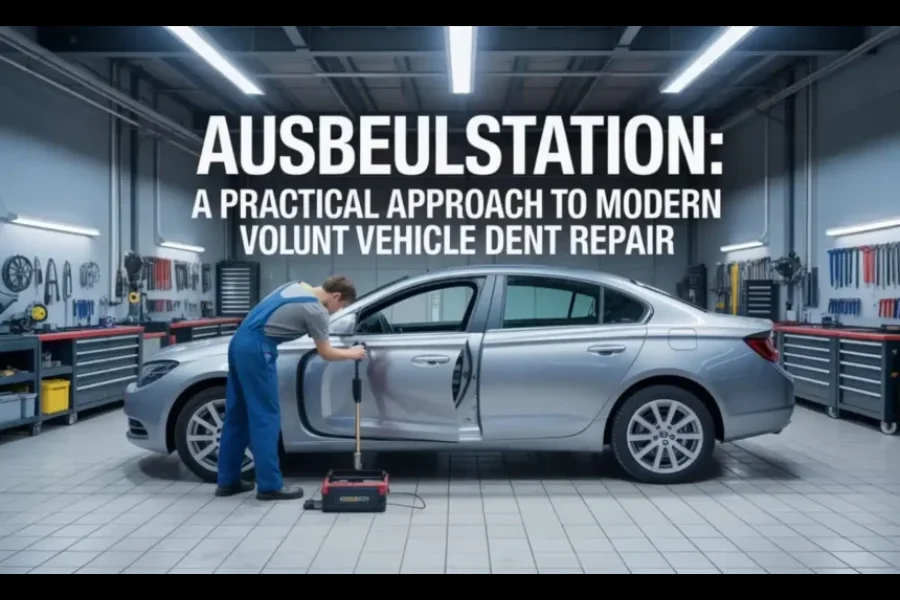
Lighting plays a surprisingly important role in paintless dent repair. In fact, many technicians consider proper lighting just as important as the tools used to move the metal. Without specialized lighting, it can be very difficult to see subtle distortions in a vehicle’s body panel.
LED reflection lights and inspection boards are designed to solve this problem. These systems project clear lines or patterns across the surface of the vehicle. When the panel is perfectly smooth, the lines appear straight and evenly spaced. However, if a dent or distortion is present, the lines bend or shift. This makes the damage easier to locate and analyze.
During a repair, technicians constantly observe these reflections while adjusting the metal. Even small pushes or taps can change how the lines appear. By watching these changes carefully, the technician can determine exactly where more pressure is needed or where the surface needs refinement.
High-quality LED lighting also reduces shadows and improves visibility. Many Ausbeulstation setups include adjustable lighting stands that allow technicians to position the lights at different angles depending on the dent location.
Inspection boards work in a similar way. They often use striped or gradient patterns that highlight surface variations. These visual guides help technicians achieve the level of precision needed for a clean repair. Without proper lighting, it would be extremely difficult to restore a panel so accurately without sanding or repainting.
Safety Gear and Supporting Accessories
Although paintless dent repair does not involve heavy sanding or chemical paints, safety is still an important part of an Ausbeulstation setup. Technicians work with metal panels, tools under tension, and heated adhesives, so proper protective equipment helps prevent accidents and keeps the workspace efficient.
Gloves protect the hands from sharp edges inside panels and reduce strain during long repair sessions. Safety glasses help guard against small debris or adhesive fragments that may come loose during glue pulling or tapping work.
In addition to personal protective equipment, many supporting accessories help improve the workflow inside an Ausbeulstation. Work mats, padded stands, and panel supports help stabilize the vehicle or the technician’s tools during a repair. Clamps and braces are sometimes used to hold rods in position when working inside tight spaces.
Organization also plays a role in safety and efficiency. Keeping tools clean and properly stored prevents unnecessary damage to the vehicle surface and allows technicians to quickly select the right tool for the job. Many professionals use tool carts or wall-mounted racks to keep rods, tabs, and knockdown tools easily accessible.
Regular tool maintenance is another important factor. Clean tips, well-maintained rods, and properly functioning pullers ensure consistent repair quality. While these accessories may seem simple, they help create a safer and more productive working environment for technicians.
Benefits of Using an Ausbeulstation Instead of Traditional Dent Repair
Traditional dent repair methods have been used in auto body shops for decades. These methods usually involve sanding the damaged area, applying body filler, repainting the panel, and polishing the final surface. While this approach can restore the appearance of a damaged panel, it often requires several materials, multiple repair stages, and more time in the workshop.
An Ausbeulstation takes a different approach. Instead of covering the damage with filler and paint, the goal is to carefully reshape the metal back to its original form. This process is commonly known as paintless dent repair (PDR). Technicians use specialized tools to gently push or pull the dented metal until the panel returns to its original shape.
Because the factory paint is preserved and the original metal is restored, this method can offer several advantages compared to traditional repairs. Customers often benefit from faster service and lower repair costs, while workshops can complete more repairs in less time.
Another important factor is the quality of the result. When done correctly, paintless dent repair can remove dents so effectively that the panel looks untouched. There is no color mismatch, no filler beneath the paint, and no need for repainting.
For these reasons, many modern repair shops now include an Ausbeulstation as part of their service offerings. It provides a practical solution for repairing minor dents while preserving the vehicle’s original finish.
Preserving the Vehicle’s Original Paint
One of the biggest advantages of using an Ausbeulstation is the ability to preserve the vehicle’s original factory paint. Factory paint finishes are applied under highly controlled manufacturing conditions using advanced equipment and precise temperature settings.
When traditional dent repair methods are used, the damaged area usually needs to be sanded and repainted. Even when the repainting is done professionally, it still replaces the original factory finish. In some cases, slight color differences or variations in texture can occur, especially on older vehicles where the surrounding paint has faded over time.
Paintless dent repair avoids this problem because the repair focuses on reshaping the metal rather than replacing the paint. Technicians carefully manipulate the panel from behind or gently pull the dent outward until the metal returns to its original form. Since the paint remains intact during this process, the vehicle keeps its factory finish.
For car owners, this can be an important factor when it comes to resale value. Vehicles that retain their original paint are often considered more desirable in the used car market. Buyers and collectors tend to view original paint as a sign that the vehicle has not undergone major body repairs.
Faster Repair Times for Minor Dents

Another major benefit of an Ausbeulstation is the speed of the repair process. Traditional dent repair usually involves several steps that require waiting time between stages. After sanding the damaged area, technicians typically apply body filler, wait for it to cure, sand it again, apply primer, repaint the panel, and finally polish the surface. Each of these steps takes time, and the vehicle may need to remain in the shop for several days.
Because the process involves fewer materials and fewer preparation steps, repairs can often be completed much faster. Many small dents can be fixed within one to three hours, depending on the size and location of the damage. Even larger jobs, such as repairing multiple dents from a hailstorm, may be completed in a single day.
For customers, this shorter repair time can be very convenient. Instead of leaving their vehicle at the shop for several days, they may be able to drop it off in the morning and pick it up later the same day. Workshops also benefit from faster repairs. When technicians can complete jobs more quickly, the shop can serve more customers without expanding the workspace or hiring additional staff.
Lower Repair Costs for Customers
Cost is often one of the main concerns when a vehicle owner discovers a dent. Traditional body repair methods can become expensive because they require multiple materials and labor-intensive steps. Paint, primer, body fillers, sanding tools, and finishing products all add to the total cost of the repair. Skilled labor for color matching and repainting also increases the final bill.
An Ausbeulstation often provides a more affordable solution, especially for minor dents. Since paintless dent repair focuses on restoring the metal rather than rebuilding the surface, many of the materials used in traditional repairs are no longer needed. There is usually no filler, no primer, and no repainting involved.
This simpler process means fewer supplies and fewer repair stages. As a result, technicians can complete the job more efficiently, which often lowers the overall cost for the customer. Insurance companies also recognize these benefits. In many cases, they prefer paintless dent repair for minor damage because it reduces claim costs while still restoring the vehicle’s appearance.
Lower costs do not necessarily mean lower quality. When performed by an experienced technician, paintless dent repair can produce results that are nearly invisible. The repaired panel often looks exactly as it did before the damage occurred. For customers, this combination of quality and affordability makes an Ausbeulstation an attractive option for repairing small dents.
Reduced Environmental Impact
Environmental considerations are becoming increasingly important in many industries, including automotive repair. Traditional body repair methods often involve chemicals and materials that can affect air quality and create waste. Automotive paints, solvents, and primers contain compounds that must be carefully handled and disposed of according to environmental regulations.
Because repainting is not required in paintless dent repair, an Ausbeulstation naturally reduces the use of many of these substances. The process focuses on reshaping the existing metal panel instead of applying new coatings or chemical treatments. As a result, fewer paints, solvents, and fillers are used during the repair.
This reduction in chemical usage helps lower emissions that are typically associated with automotive painting processes. It also reduces the amount of hazardous waste generated by the workshop. For repair shops that aim to operate more sustainably, incorporating paintless dent repair into their services can be a meaningful step toward environmentally responsible practices.
Customers are also becoming more aware of environmental issues. Many people prefer service providers that use methods with a lower environmental impact. Choosing a repair method that avoids unnecessary chemicals can align with these preferences. While paintless dent repair may not replace traditional repair methods in every situation, it offers a cleaner alternative for many types of minor dents.
Final Words
A small dent on your car can be frustrating, but it doesn’t always mean sanding, filler, or repainting. That’s where an Ausbeulstation comes in. This specialized workstation is used for paintless dent repair (PDR), allowing technicians to gently push or pull the metal back into place while keeping the factory paint intact.
Paintless dent repair works best on small to medium dents, like hail damage or parking lot dings. Technicians inspect the dent under reflection lights, choose the right tool—either rods from behind or glue pulling from the outside—and carefully reshape the panel. Finishing touches are applied with knockdown tools to ensure a smooth surface.
The benefits are clear: repairs are faster, often cheaper, and preserve the car’s original paint, which helps maintain resale value. Less paint and chemicals are used, making PDR environmentally friendly. With the right setup and skilled hands, an Ausbeulstation can make dents disappear while keeping your car looking like new.
Keep spinning, building strength, and embracing your power with Twirl N Shape Pole Fitness.