

Key Takeaways
- SEO-driven website migrations are critical to preserving rankings, traffic, and long-term search visibility.
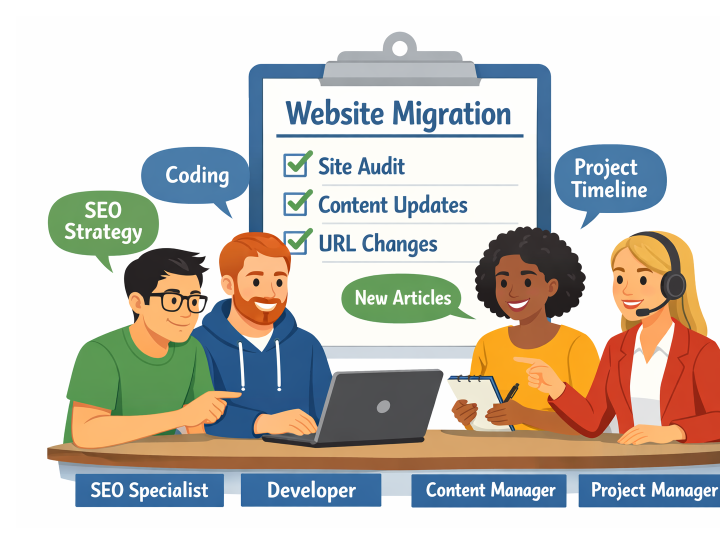
- A cross-functional migration team helps ensure coordination between SEO, development, content, and project management.
- Benchmarking pre-migration performance is essential for measuring success and identifying post-launch issues.
- A comprehensive site audit prevents loss of important pages and helps resolve existing SEO issues before migration.
- Proper URL mapping and 301 redirects are key to maintaining link equity and avoiding broken user journeys.
- Strong technical SEO setup (robots.txt, XML sitemaps, structured data, mobile readiness) ensures smooth indexing.
- Backups and real-time monitoring provide safeguards against errors and allow quick recovery if issues arise.
- Post-migration tracking of traffic, rankings, and crawl errors is necessary to validate performance and fix problems quickly.
Introduction
Website migrations, whether moving to a new domain or replatforming, represent some of the highest-stakes changes in digital strategy. Performing an SEO-driven migration preserves your site’s hard-earned rankings and can prevent dramatic drops in organic traffic. A solid plan ensures that both users and search engines experience a seamless transition, keeping your business visible and competitive in search results. To ensure your migration goes smoothly, consider leveraging professional support from experts in the field, such as https://victorious.com/services/seo/seo-migration-services/, who can guide the process step by step.
Every aspect, from auditing existing URLs to establishing proper redirects, requires attention to detail. Failing to follow best practices commonly leads to crawl errors, lost rankings, and a negative user experience. This checklist will help you tackle your website move with confidence, protecting your SEO investments for the long term.
Assemble Your Migration Team
Start by gathering a cross-functional migration team. Include SEO specialists who understand potential ranking risks, developers who can manage the technical workload, content owners to ensure page accuracy, and a project manager to keep timelines on track. If each member’s responsibilities are defined clearly at the outset, miscommunication and missed steps can be minimized, critical for smooth execution.
Regular communication and shared documentation among all members help ensure that no detail is overlooked during early planning or later troubleshooting.
Benchmark Current SEO Performance
The success of a migration can only be measured against clear, pre-move benchmarks. Collect and document critical SEO metrics:
- Organic Traffic: Review traffic data for major landing pages over the last 6-12 months, noting seasonal fluctuations and top referrals.
- Keyword Rankings: Record positions for your most valuable keywords, including branded and non-branded queries.
- Backlink Profile: Use tools to capture the present state of your inbound links; these are crucial for maintaining authority post-move.
- Site Speed and User Experience: Use PageSpeed Insights or Core Web Vitals reporting to establish baseline load times and assess interactivity.
These measurements serve as your reference point for evaluating the migration’s effectiveness and detecting changes that require urgent fixes.
Conduct a Comprehensive Site Audit
An in-depth audit of your current site prevents critical pages and assets from getting lost in the move. Complete the following tasks:
- URL Inventory: Use crawling tools to capture all indexed URLs, ensuring nothing is inadvertently missed or orphaned.
- Content Evaluation: Assess content quality and decide which pages should be migrated as-is, updated, merged, or pruned based on performance data and audience needs.
- Technical SEO Checks: Review for errors such as broken internal links, duplicate content issues, slow-loading pages, or crawl anomalies. These should be addressed before the transition to avoid carrying over existing problems.
Additionally, creating a visual map of your current site structure can offer valuable insights during planning and serve as another verification layer, ensuring that all critical content and navigation remain intact post-migration.
Develop a URL Mapping and Redirect Strategy
Maintaining the equity built by your existing URLs is vital. Perform a precise mapping of each old URL to its future destination and set up permanent (301) redirects. This thoroughness ensures that users and search engines are seamlessly guided to the correct pages, preserving rankings and providing a positive experience.
- Map Old to New URLs: Document every migration path with spreadsheets and automation where possible for complex sites.
- Implement 301 Redirects: Test redirects on a staging environment to confirm all rules work as intended. Only configure redirects that pass link equity to new addresses.
- Test Before Launch: Use site-crawling tools again after redirect implementation to quickly catch and fix any broken redirects or unwanted 404 errors.
Prepare the New Site’s Technical SEO Foundation
Ensuring your new site is technically sound allows for smooth crawling and indexing from launch. Review these elements:
- Robots.txt and Meta Tags: Confirm the robots.txt file accurately controls crawler access, and ensure all meta robots tags are set to permit the required indexing status.
- XML Sitemap: Create and upload a sitemap reflecting your new site structure. Submit it to Google Search Console for rapid discovery and crawling.
- Structured Data: Integrate appropriate schema.org markup to help your content stand out in search results, boosting click-through rates.
- Mobile Responsiveness: Test your new design thoroughly on multiple devices. Use Google’s Mobile-Friendly Test tool to confirm usability and compliance with mobile-first indexing standards.
Backup and Monitor
Errors can happen even with careful planning. Protect your work and respond quickly with comprehensive backups and monitoring:
- Backup Current Site: Secure a full copy of your current site, including all files and databases, in case rollback is necessary.
- Set Up Monitoring Tools: Implement Google Analytics and Search Console for both old and new properties, enabling you to spot issues, track migration impacts, and adjust in real time as needed.
It is also smart to establish a clear post-launch communication protocol among your migration team, so everyone can respond quickly if issues or discrepancies are detected by monitoring tools.
Post-Migration Checks
After your new site goes live, perform immediate and ongoing checks to safeguard your SEO:
- Monitor Traffic and Rankings: Compare migration impact against your benchmarks daily in the first weeks to quickly identify potential traffic or ranking drops.
- Check for Crawl Errors: Explore Google Search Console for issues such as missing pages, blocked content, or crawl spikes that may signal problems after launch.
- Update External Links: Reach out to key partners and authoritative sites to update priority backlinks and maintain link equity after your move.
Final Thoughts
Website migrations demand rigorous preparation and meticulous attention to detail. Following a comprehensive SEO checklist protects your rankings, upholds user experience, and positions your project for long-term success. Invest adequate resources upfront, and you will reduce the risk of traffic losses typically associated with site moves. With proper planning and careful execution, even complex migrations are manageable and can yield improved long-term results for your website and business.