
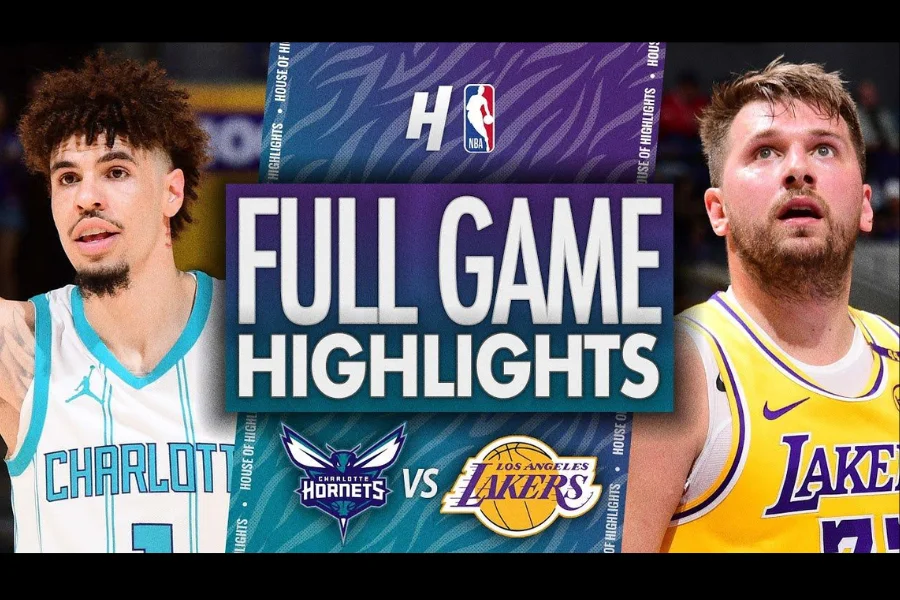

Charlotte hornets vs lakers match player stats: When the Los Angeles Lakers face the Charlotte Hornets, it’s more than just a game—it’s a showdown of styles. On one side, you have the Lakers, packed with seasoned stars who know how to control the pace and dominate inside. On the other, the Hornets bring energy, speed, and young talent that can surprise even the best defenses.
Looking at the player stats from these matchups isn’t just for numbers nerds—it’s a way to see the game in action. Who controlled the boards? Which guards created the most scoring chances? How did the bench players impact the flow? Stats give you a clear picture of how each team executed its game plan and who really made a difference.
In this breakdown, we’ll dive into every angle—from scoring and rebounds to defense, turnovers, and clutch moments. By the end, you’ll understand not just who won, but how the game was played, play by play, through the lens of real player stats.
Overview of the Game
When the Lakers face the Charlotte Hornets, you get a classic clash: experience versus youth. The Lakers, with their veteran stars, rely on structured play and smart positioning. The Hornets, on the other hand, bring energy, speed, and daring moves that can catch anyone off guard. Watching the stats from this matchup helps you see which team controlled the game and how each player contributed.
Points, assists, rebounds, steals, and turnovers all tell a story about how the game unfolded. By looking closely at these numbers, you can see which strategies worked and which didn’t.
In real life, this is like watching two types of drivers: one who relies on skill and experience to navigate tricky roads, and another who speeds through with quick reactions. Both can succeed, but in different ways. Understanding the stats is like understanding the traffic patterns—they reveal the game’s rhythm and momentum.
Key Performances: Lakers
Scoring leaders and inside dominance
The Lakers often shine in the paint. Their forwards and centers use their size and experience to score high-percentage shots near the basket. In the latest matchup, you might see a player scoring 20+ points from close range, drawing fouls, and finishing fast breaks. Guards also chip in, not just with points but by creating opportunities for others.
Here’s how this works in real life: think of a chess game. The Lakers’ big men act like pawns controlling the center, forcing the defense to react. The guards then “pass the queen” by finding the best scoring chance. This combination makes them hard to stop when executed well.
Rebounding and interior defense
Rebounding is a key area where the Lakers excel. Offensive rebounds give second-chance points, while defensive rebounds stop the Hornets from extending possessions. Blocks and shot contests also show their dominance inside.
In the game, you’ll often see Lakers’ forwards and centers positioning themselves smartly to grab boards. Even a single offensive rebound can lead to a quick score and change the momentum. It’s a reminder that basketball isn’t just scoring—it’s controlling the space.
Assist contributions and playmaking
Lakers guards are often the architects of the offense. They look for open teammates and create scoring opportunities with smart passes. This isn’t flashy, but it’s essential. High assist numbers usually signal that the team is moving the ball well and playing unselfishly.
In a real-life example, imagine a group project where one person coordinates everyone’s effort. That’s the role of a playmaker: making sure each player contributes efficiently.
Key Performances: Charlotte Hornets
Standout scorers and perimeter shooting
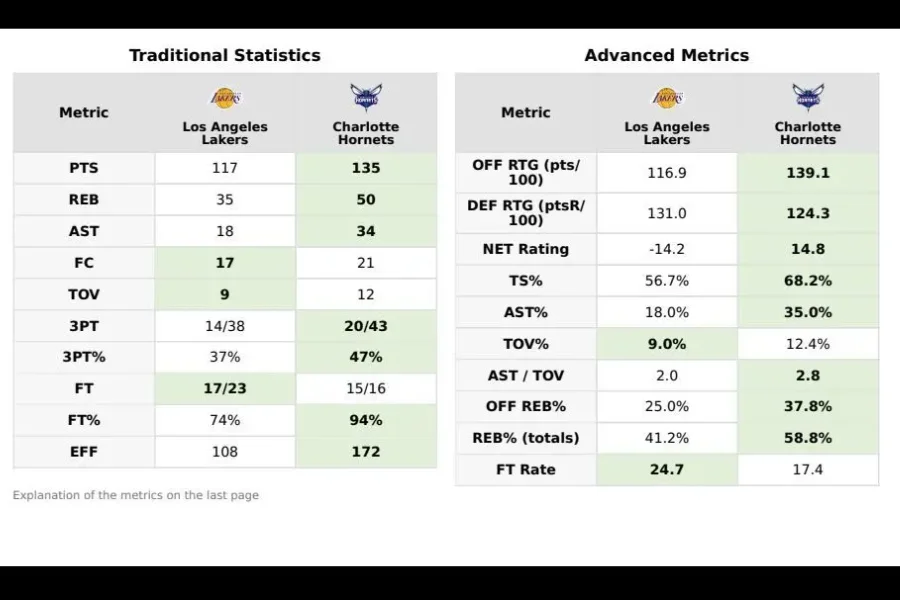
The Hornets often rely on quick, sharpshooting guards. Three-pointers and drives to the basket are their bread and butter. Their perimeter shooting spreads the defense, creating space for teammates.
Think of it like a relay race: each shooter passes the momentum along. If one player heats up, it can spark a scoring run that changes the game.
Fast-break points and steals
Steals and turnovers fuel the Hornets’ fast breaks. Quick hands and fast feet allow them to turn defensive stops into immediate points. For fans, this creates exciting runs that swing momentum rapidly.
For instance, a steal at midcourt followed by a quick layup can energize the bench and crowd. In real life, it’s like turning a small mistake into an opportunity—a skill that keeps games unpredictable.
Role of emerging talent in the game
Young players often make a big impact. Their energy, risk-taking, and willingness to drive to the hoop add another dimension. Even a bench player can hit a clutch three or grab a key rebound, showing that depth matters.
Offensive Highlights
Offense is where games are won and lost, and looking at the player stats gives you a clear picture of which team executed better. The Lakers often rely on scoring inside the paint. Their forwards and centers use size and positioning to get high-percentage shots, drawing fouls and finishing fast breaks. This approach usually leads to strong field-goal percentages and steady scoring throughout the game. The Hornets, in contrast, lean on perimeter shooting and quick drives to the basket. Their guards and wings take more long-range shots, which can be risky but yield big rewards when they connect. Watching the stats, you can see how often each team succeeded in its offensive style. For example, a Lakers star might convert 8 out of 12 shots inside, while a Hornets guard hits three critical threes in a single quarter. Understanding these patterns helps you see who controlled the flow and who relied on bursts of energy versus consistent execution.
Points, Field-Goal Percentage, and Three-Point Shooting
Breaking down scoring is one of the easiest ways to understand a team’s performance. Points tell you the total contribution, field-goal percentage shows efficiency, and three-point shooting reflects range and spacing. For the Lakers, high field-goal percentages often come from inside scoring, where their big men dominate. A single strong quarter can include multiple layups and post moves, keeping the defense on its heels. The Hornets’ outside shooting can create quick scoring bursts, but it comes with higher variability. Sometimes they hit several threes in a row, creating a momentum swing. Other times, missed long-range shots give the Lakers a chance to counterattack. Watching these stats together tells you which team executed their offense more effectively and which approach produced better results in that specific matchup.
How Each Team Executed Their Offensive Strategy
Offensive strategy is more than scoring—it’s spacing, passing, and timing. The Lakers stick to structured plays, using pick-and-rolls, set cuts, and smart spacing to find open shots. Their stats often show steady assists alongside high field-goal percentages. The Hornets, however, focus on ball movement and fast drives. They rely on quick passes, cutting off the ball, and aggressive perimeter shots to keep defenses unsettled. By comparing assists, shot locations, and turnovers, you can see how closely each team followed its game plan. For example, a Lakers guard might facilitate multiple scoring opportunities in a quarter, while a Hornets wing creates a fast-break three after a steal. These numbers show whether the team’s intended style succeeded in practice or if adjustments were needed.
Momentum Shifts from Scoring Runs
Momentum can define a game, and scoring runs are the clearest measure. When one team goes on a 10-point streak, it forces the other team to react defensively, sometimes leading to turnovers or rushed shots. The Lakers’ methodical inside game can slow these swings, while the Hornets’ quick, perimeter-heavy style can create sudden bursts that change the game in minutes. Player stats help track these runs—consecutive points, shooting streaks, and fast-break points all tell the story. For instance, three consecutive three-pointers by a Hornets guard can swing the score and energize the bench, while a Lakers big man scoring multiple post points stabilizes the momentum. Understanding these patterns shows how each team responds to pressure and controls the pace throughout the game.
Defensive Impact
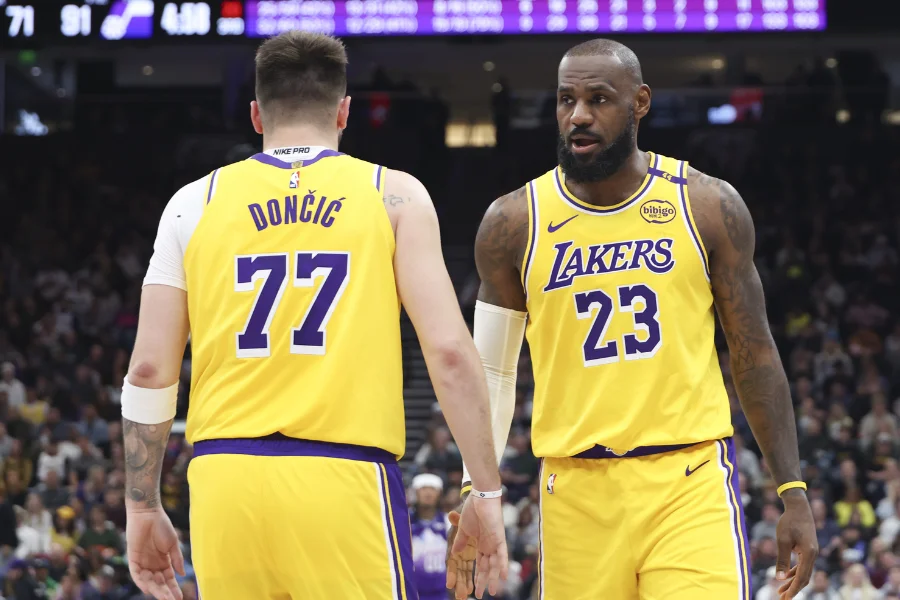
Defense often doesn’t get the same spotlight as scoring, but it can decide the outcome of a game. The Lakers use their size to protect the paint, blocking shots and grabbing defensive rebounds to prevent second-chance points. The Hornets, meanwhile, rely on quick hands and fast reactions to generate steals on the perimeter. Both approaches show up clearly in the stats: blocks and rebounds for the Lakers, steals and fast-break points for the Hornets. High numbers in these categories usually correlate with team success because stopping the opponent is just as important as scoring yourself. In one recent matchup, a single Lakers block in the third quarter prevented an easy Hornets layup and sparked a Lakers fast-break run. Meanwhile, Hornets guards turned a couple of defensive steals into quick threes, shifting momentum. Stats like these tell the story of who controlled the game beyond points and highlight the players making critical defensive contributions.
Steals, Blocks, and Defensive Rebounds
Steals, blocks, and defensive rebounds are key indicators of defensive impact. Steals give your team extra possessions, blocks prevent easy baskets, and rebounds stop the opposing team from extending plays. For the Lakers, big men in the paint often dominate defensive rebounds and block attempts, limiting Hornets scoring opportunities near the basket. Hornets guards and wings, on the other hand, use speed and anticipation to grab steals and create fast-break chances. For example, a Hornets guard might pick off a pass at half court and quickly convert it into a layup. In the stats, you’ll see this as steals, points off turnovers, and rebound numbers all connected. These defensive contributions often set up scoring runs or halt momentum, showing that defense can swing the game just as much as offense.
Game-Changing Defensive Plays
Sometimes, a single play changes a quarter or even the game. A well-timed block, a clutch steal, or a contested shot can stop momentum for one team and ignite it for the other. These plays might not dominate the headlines, but the stats reflect their importance. For instance, a Lakers center rejecting a Hornets dunk attempt can lead to a fast-break score, shifting the scoreboard. Similarly, a Hornets wing stealing the ball and hitting a three-pointer can trigger a scoring run that forces the Lakers to adjust their defense. By tracking defensive plays alongside scoring stats, you can see how momentum shifts throughout the game and which team made critical stops at the right moments.
How Defense Shaped the Final Outcome
Defense often decides the winner in close games. Teams that protect the basket, force turnovers, and control rebounds usually gain the edge. By combining defensive stats with offensive numbers, you get a complete picture of the matchup. In Lakers-Hornets games, you might notice the Lakers maintaining a lead thanks to high defensive rebound totals, while the Hornets rely on steals and fast-break points to stay competitive. Understanding these patterns shows you not just who scored, but who effectively limited their opponent’s opportunities. It’s a reminder that basketball isn’t just about putting points on the board—stopping your opponent is equally crucial.
Bench and Role Player Contributions
Bench players often swing a game without drawing the spotlight. In Lakers-Hornets matchups, substitutes provide energy, scoring, and defensive support when starters rest. A bench forward might grab key rebounds, a guard could hit a clutch three, or a substitute might force a turnover that sparks a run. These contributions are visible in the stats through points off the bench, minutes played, rebounds, and steals. For example, a Lakers bench player entering late in the second quarter might grab two offensive rebounds that lead to easy points, helping the team extend its lead. Hornets substitutes often bring speed and hustle, keeping the pressure on the defense. Tracking these contributions highlights the depth of each team and shows that every player can impact the outcome.
Impact of Substitutes on Scoring and Defense
Substitutes keep intensity high and maintain the team’s rhythm. Their stats often reveal crucial scoring bursts or defensive stops when starters sit. For example, a Hornets bench guard might hit back-to-back three-pointers, forcing the Lakers to adjust defensively. On defense, a substitute who grabs rebounds or forces turnovers can energize the team and spark a fast break. These contributions may seem small, but over the course of a game, they can swing momentum, change leads, and create opportunities for starters to capitalize.
Energy, Hustle, and Maintaining Team Rhythm

Hustle plays often show up in steals, rebounds, and fast-break points. A quick steal by a bench player can ignite the offense, or a critical rebound can prevent an opponent from scoring. Lakers and Hornets alike rely on these contributions to maintain consistent performance, especially in the second half. Stats like minutes played, points off the bench, and defensive stops highlight who brought energy at key moments. These plays also help the starters stay effective, as substitutes keep the pace without losing intensity.
Examples of Crucial Bench Plays
Sometimes, a single play from a role player changes the game. A clutch three, a key defensive rebound, or a steal that leads to fast-break points can swing momentum. In Lakers-Hornets games, these moments often appear in stats and tell the story of how depth contributed to the outcome. Observing these numbers lets you appreciate contributions beyond the stars and shows that every player’s effort matters in close contests.
Turnovers and Game Flow
Turnovers are more than mistakes—they directly influence momentum. The Hornets’ fast-paced style can create turnovers but also fast-break opportunities, while the Lakers’ controlled approach aims to limit errors. Stats reveal how these dynamics played out. A single careless pass by a Lakers player might result in a Hornets fast-break three, shifting the score. Conversely, a sequence of Hornets turnovers can give the Lakers multiple easy baskets, controlling the game’s rhythm. Tracking turnovers alongside points and steals shows which team dictated the pace and capitalized on mistakes.
Comparing Lakers’ Controlled Pace vs Hornets’ Fast Tempo
The Lakers use structured plays, minimizing risky passes and emphasizing deliberate offense. The Hornets embrace speed, quick shots, and aggressive drives. Stats like turnovers, fast-break points, and points off transition clearly illustrate these different styles. For example, a Lakers team committing only a few turnovers while maintaining high field-goal efficiency demonstrates control, while the Hornets may score in bursts but also risk giving up possessions. Comparing these numbers shows how tempo affects scoring efficiency and defensive pressure throughout the game.
Key Moments Where Turnovers Shifted the Game
Turnovers can trigger scoring runs and change momentum in minutes. A Hornets steal leading to a fast-break layup can energize the crowd and swing the score, while a Lakers error might give the Hornets a quick three-pointer. By tracking sequences of turnovers and resulting points, you can see exactly how each team’s mistakes affected the game. Stats highlight not just individual errors but how they influenced momentum, forcing both teams to adjust on the fly.
Clutch Moments and Fourth Quarter Performance
The fourth quarter is where basketball games are often won or lost, and the stats from this period tell the story of who handled pressure best. In Lakers vs. Hornets matchups, you can see a clear contrast between veteran experience and youthful fearlessness. The Lakers’ seasoned players tend to stay calm, making smart decisions with the ball, drawing fouls, and taking high-percentage shots. Their composure often stabilizes the team when the score is tight. On the other hand, Hornets’ young stars are fearless. They attack the basket aggressively, take open threes, and make quick decisions, which can energize the team and crowd alike. Watching fourth-quarter stats—points scored, shooting percentages, turnovers, and assists—reveals which players stepped up when it mattered most. For example, a Lakers veteran might score consecutive inside baskets to maintain a lead, while a Hornets guard might respond with back-to-back threes, keeping the game competitive. These numbers help you see not just who scored, but who influenced momentum and pressured the opposing team to react.
Who Stepped Up in Critical Moments

Clutch performance is about more than raw points—it’s about timing and decision-making. In crunch time, every possession counts. Stats from recent Lakers-Hornets games show that veteran Lakers players often control the ball, find open teammates, and execute set plays with precision. Meanwhile, Hornets’ young stars may take more risks, driving aggressively or pulling up for long-range shots under pressure. The stats highlight these contributions through points scored in the last five minutes, shooting efficiency, and turnovers avoided. For instance, a Lakers forward might hit a tough fadeaway jumper while drawing a foul, creating a three-point opportunity and calming the team. At the same time, a Hornets guard might respond with a steal and fast-break layup, keeping the momentum alive. These critical moments, captured in the stats, tell you which players were decisive, who could handle pressure, and how both teams adapted in real time.
Free Throws, Decisive Shots, and Defensive Stops
Close games often come down to free throws and critical defensive plays. A missed or made free throw in the final minutes can flip the scoreboard, while a timely steal or blocked shot can spark a run that changes momentum. Stats help highlight these small but decisive actions. For example, a Lakers guard might sink two clutch free throws to extend a lead, while a Hornets wing might force a turnover and convert it into a fast-break basket, keeping the game close. Tracking these numbers—free-throw percentages, points scored in the final two minutes, and defensive stops—shows who delivered under pressure. These actions may not dominate highlights, but they often define the game. Even one successful defensive play or made free throw in the closing moments can tip the scale in a tightly contested matchup.
How Experience vs Youth Influenced the Closing Minutes
Experience and youth create contrasting approaches in the final minutes. Veteran Lakers players usually remain composed, making deliberate passes, taking safe shots, and managing the clock. Their experience helps minimize turnovers and maintain efficiency. Young Hornets players, conversely, play boldly, attacking the rim or pulling up for threes, sometimes taking risks that pay off and sometimes creating turnovers. Fourth-quarter stats reflect this dynamic: you might see the Lakers maintaining higher shooting percentages and fewer turnovers, while the Hornets generate quick points through aggressive plays. This mix of composure and fearless energy often produces dramatic finishes. Understanding the stats from this period can show you not only who scored, but who influenced the tempo, pressured defenses, and executed in high-stakes situations. The final minutes often crystallize the story of the game, where experience steadies the ship and youth injects energy and unpredictability.
Final Words
When the Los Angeles Lakers face the Charlotte Hornets, it’s a clash of styles. The Lakers bring veteran experience, structured offense, and inside dominance. The Hornets rely on youthful energy, speed, and perimeter shooting to keep defenses guessing. Looking at the player stats helps you see the game beyond the score. You can track who controlled rebounds, created scoring chances, and shifted momentum.
For the Lakers, big men often dominate the paint, grabbing rebounds, blocking shots, and scoring efficiently. Guards contribute with smart passes and assists, keeping the offense flowing. The Hornets thrive on fast breaks, steals, and three-point shooting, with young players making bold, game-changing plays. Bench players on both teams add energy, clutch scoring, and defensive support that can swing the outcome.
In the fourth quarter, experience and composure often tip the scale, while fearless youth injects energy and unpredictability. Stats reveal not just who scored, but who truly influenced the game’s flow and momentum.
Explore Twirl N Shape at Your Own Pace — Excitement Around Every Corner.