
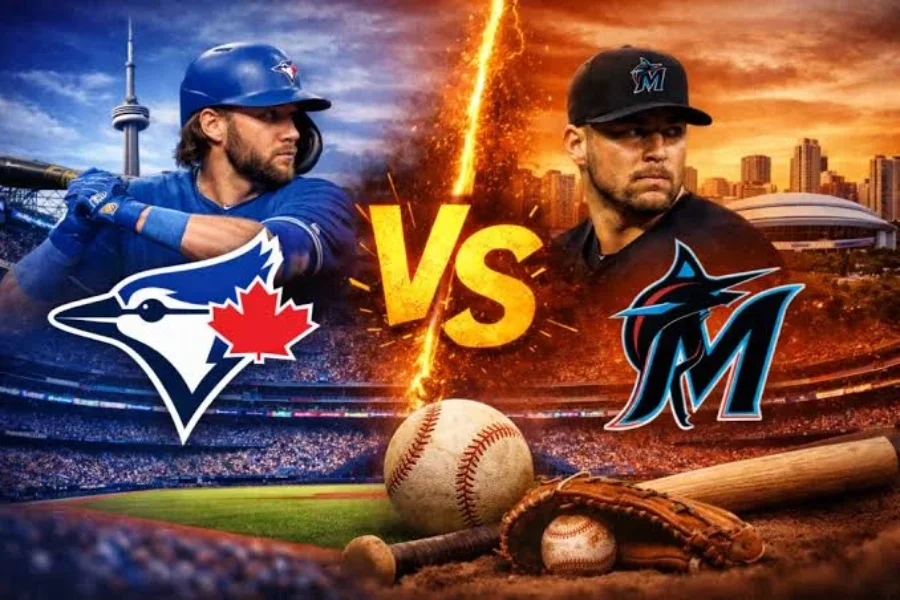

Baseball rivalries often grow from years of playoff battles or division showdowns. The Toronto Blue Jays vs Miami Marlins timeline is different. These teams rarely meet, yet their games still produce exciting moments that baseball fans remember.
The reason is simple: they play in different leagues. The Toronto Blue Jays compete in the American League, while the Miami Marlins belong to the National League. Because of this, they only face each other during interleague play. These matchups feel fresh every time because players don’t see each other often.
That unfamiliarity can change how games unfold. Pitchers face hitters they don’t know well. Managers adjust strategies quickly. Fans also get something different from their usual schedule. In real life, think about playing a sport against someone new. You don’t know their style. That unpredictability makes the game more exciting. The same thing happens when Toronto and Miami meet.
Over the years, the Marlins have held a small edge in the all-time record, leading the series by several games. Still, the Blue Jays have produced strong performances in recent seasons, especially during tight three-game series. Good sports storytelling isn’t just about rivalries. That’s exactly what this timeline highlights.
Early History of the Blue Jays vs Marlins Matchup (1990s Origins)
Expansion of the Marlins and the Start of Interleague Play
To understand the Toronto Blue Jays vs Miami Marlins timeline, you have to start in the 1990s. The Marlins were born in 1993 as an expansion team called the Florida Marlins. At that time, Major League Baseball was growing and experimenting with new markets. South Florida quickly became home to a young but ambitious franchise.
The Blue Jays, on the other hand, were already established. They had joined MLB in 1977 and had just achieved something historic—back-to-back World Series titles in 1992 and 1993. But there was one catch. American League teams and National League teams rarely played each other during the regular season.
That changed in 1997, when MLB introduced interleague play. Suddenly, teams from different leagues could face off during the regular season. This new system created matchups fans had never seen before.
According to MLB coverage and industry analysis, interleague play increased fan interest and television viewership because it introduced new opponents and storylines (MLB scheduling reports and sports media analysis).
When Toronto and Miami met for the first time under this format, the games felt unusual. Players were unfamiliar with opposing pitchers. Scouts had limited reports. The result was often offense-heavy baseball. Imagine playing chess against someone you’ve never studied. You can’t predict their moves. That’s exactly how early interleague games felt.
First Meetings Between Toronto and Florida/Miami
When the Blue Jays and Marlins first met, the contrast between the teams was clear. Toronto was experienced. Their roster still carried players connected to their championship era. The team understood how to win big games and manage pressure. Miami was new. The franchise was still building its identity. Young players were trying to prove themselves in the league.
Early matchups often showed that difference. Toronto’s lineup had stronger depth, while Miami relied more on developing talent. Even so, the Marlins were quick learners. Baseball history shows how fast expansion teams can grow. The Marlins shocked the baseball world by winning the 1997 World Series, just four years after their debut. That sudden success changed how teams viewed Miami. They were no longer the “new team.” They were champions.
In games against Toronto, this new confidence started to show. Matchups became tighter. Pitching improved. Offense became more balanced. Fans also started paying attention. Anytime a rising team faces a former champion, curiosity grows. Think about a young athlete challenging an experienced player. At first, the veteran dominates. But over time, the newcomer catches up. That’s exactly how this matchup evolved.
Impact of the Blue Jays’ 1990s Success and Marlins’ Early Growth
The late 1990s were a fascinating time for both franchises. Toronto was transitioning from its championship era. Some stars had moved on or retired. The team was trying to stay competitive in the extremely tough American League East, which included the Yankees and Red Sox. Miami was moving in the opposite direction. The Marlins were rising quickly. Their roster combined young talent with bold management decisions.
This difference shaped many of their matchups. Toronto often relied on experienced players who understood situational baseball. They focused on discipline at the plate and structured offense. Miami played with speed and energy. Their younger roster brought aggressive base running and fearless hitting. This clash of styles made games unpredictable. One night might feature strong pitching. The next might explode into high scoring.
Sports analysts often point out that unfamiliar matchups create more volatility. When teams rarely play each other, preparation becomes harder. The Toronto Blue Jays vs Miami Marlins timeline in the late 1990s reflects this perfectly. Every series felt like a fresh experiment. Fans didn’t know what would happen. And that uncertainty kept people watching.
2000s Era: Rebuilding Years and Competitive Interleague Games
Marlins’ 2003 Championship Era and Its Influence
The early 2000s changed the story again. In 2003, the Marlins shocked baseball by winning another World Series. They defeated the New York Yankees and proved that their earlier success wasn’t luck. That championship affected every matchup that followed, including games against Toronto. Confidence matters in sports. When a team wins a title, players believe they can beat anyone.
Miami’s roster featured strong pitching and young hitters. Their strategy often focused on pitching depth and timely hitting rather than constant power. When they faced the Blue Jays, those strengths became clear. Toronto could score runs quickly, but Miami pitchers often slowed the pace of games. This created tight contests that came down to late innings.
In real life, it’s like two different game plans meeting head-to-head. One team pushes offense. The other controls tempo. The 2003 title also changed how the league viewed the Marlins. They were no longer rebuilding—they were proven winners. This reputation made their games against Toronto more competitive and respected.
Blue Jays’ Search for Consistency in the AL East
While Miami celebrated championships, Toronto faced a different challenge. The American League East is one of the toughest divisions in baseball. Teams like the Yankees and Red Sox dominate headlines and payrolls. For the Blue Jays, staying competitive required patience and smart rebuilding.
Throughout the early 2000s, Toronto focused on developing young talent and improving pitching depth. Some seasons showed promise. Others were rebuilding years. But when interleague play arrived, the Blue Jays often used those games to test strategies. Managers experimented with pitching rotations. Younger players gained valuable experience.
According to sports management insights frequently cited in Forbes sports business coverage, teams often use non-divisional games to experiment with lineups and player development. That approach appeared in several Blue Jays vs Marlins games. Toronto sometimes gave younger players opportunities during these series. Even if the games didn’t affect division standings directly, they still mattered for team growth. Fans watching these matchups often saw rising players before they became stars.
Notable Early 2000s Matchups and Close Games
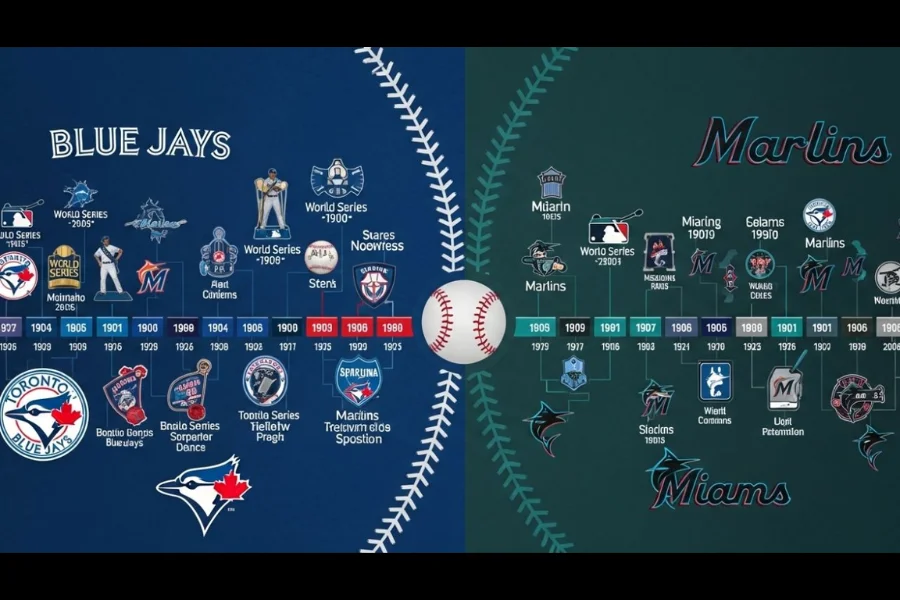
Despite rebuilding phases, the early 2000s still produced memorable contests. Many of these games followed a familiar pattern. They stayed close for most of the night and then shifted suddenly in the final innings. That’s part of baseball’s magic. A pitcher might dominate for seven innings. Then one swing changes everything.
Some Blue Jays vs Marlins games featured extra innings, walk-off hits, and comeback rallies. Those dramatic endings made them stand out even without playoff stakes. Fans often remember the emotion of those moments more than the final score.
Imagine sitting in a stadium where the crowd suddenly roars after a walk-off hit. Even if the game didn’t decide a championship, it still becomes unforgettable. These types of games added personality to the Toronto Blue Jays vs Miami Marlins timeline. They reminded fans that baseball doesn’t always need a rivalry to create excitement.
Mid-2010s Power Era and Offensive Matchups
Toronto’s Power-Hitting Lineups (2015–2016)
The mid-2010s were a thrilling time for Blue Jays fans. Toronto built one of the most powerful lineups in baseball. Sluggers like José Bautista, Edwin Encarnación, and Josh Donaldson turned the team into an offensive powerhouse. When the Blue Jays played the Marlins during this period, runs often came quickly.
The team relied heavily on home runs and aggressive hitting. Instead of slowly building innings, they aimed to score in big bursts. That strategy worked especially well in Rogers Centre, a stadium known for helping hitters. Sports data studies regularly show how ballpark dimensions influence scoring. Smaller outfield distances and indoor conditions can increase home run totals.
When Miami visited Toronto, their pitchers had to adjust quickly. One mistake could leave the park. These games were exciting for fans because every inning carried scoring potential. Think of it like fireworks.
Emerging Stars on Both Teams
While Toronto had established hitters, Miami was developing new talent. Young players were entering the league with speed, power, and confidence. This combination made games between the two teams feel like a clash of generations. Veteran hitters faced young pitchers. New stars tried to prove themselves against experienced opponents.
In sports, these moments often become defining milestones. A rookie might hit his first big home run. A young pitcher might shut down a powerful lineup. Fans love seeing those breakthrough performances. From a baseball development perspective, interleague games also provide a valuable learning experience. Players face unfamiliar styles and strategies.
That challenge helps them grow faster. According to coaching analysis often discussed in sports training publications, exposure to new competition accelerates player development. The Blue Jays and Marlins provided that environment for many rising players during the mid-2010s.
Memorable High-Scoring Interleague Games
Some matchups during this era felt like offensive showcases. One inning could feature multiple home runs, stolen bases, and dramatic defensive plays. These high-scoring games became fan favorites. Why? Because they offered constant action. Instead of waiting through quiet innings, fans saw scoring, pitching changes, and momentum swings.
Baseball analysts often describe these games as “momentum baseball.” One rally triggers another, and the game becomes unpredictable. In the Toronto Blue Jays vs Miami Marlins timeline, the mid-2010s featured several of these offensive battles. Fans remember them not just for the score, but for the excitement.
Watching a game where both teams keep answering each other’s runs is like watching a basketball shootout. The tension builds every inning. Those moments helped keep this interleague matchup entertaining, even without a long rivalry history.
Recent Series Timeline (2024–2025)
The Toronto Blue Jays vs Miami Marlins timeline added a new chapter in late September 2024. The teams met for a three-game series at Rogers Centre in Toronto. On paper, the matchup looked balanced. Both teams had young talent and solid pitching rotations. But the series quickly shifted in Miami’s favor.
The Marlins won all three games, completing a road sweep from September 27 to September 29. Each game followed a similar pattern. Miami jumped ahead early and forced Toronto to play catch-up. That’s one of the hardest positions in baseball. When a team falls behind early, pitchers must work carefully and hitters start pressing for big plays.
Miami handled the situation well. Their pitching staff controlled the pace of the games and limited Toronto’s scoring chances. For the Blue Jays, the series was frustrating but still useful. Late-season games often reveal weaknesses teams need to fix before the next year.
Sports analysts regularly note that late-season series can influence offseason strategy. Teams evaluate pitching depth, bullpen performance, and lineup balance. This sweep didn’t decide a playoff race, but it reminded fans how competitive interleague baseball can be.
August 22, 2025: Blue Jays Win 5–2 Behind Strong Pitching
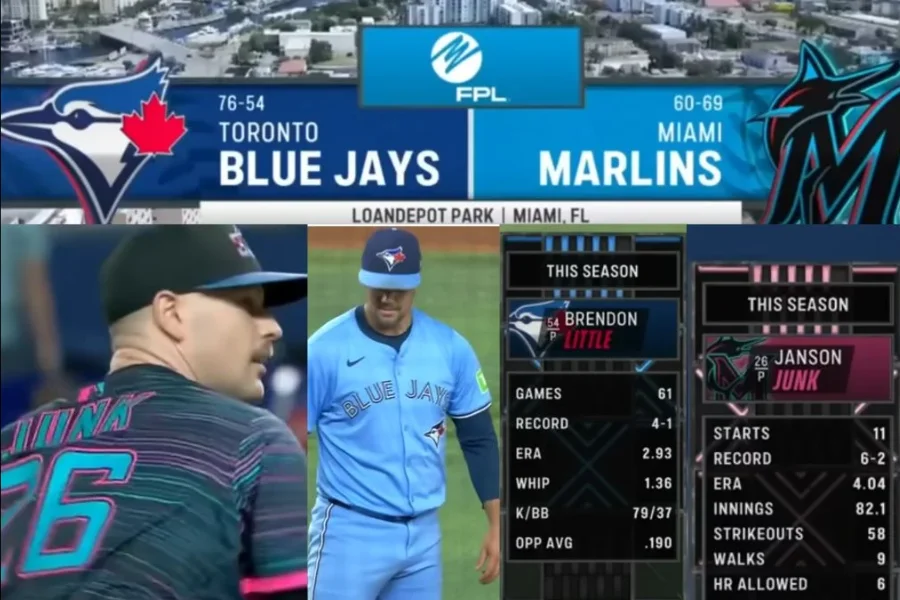
Less than a year later, the teams met again—this time in Miami during the 2025 regular season. Game one of the series immediately drew attention because of the starting pitcher. Toronto’s newly acquired ace, Shane Bieber, made a highly anticipated start after recovering from elbow surgery. Fans weren’t sure what to expect. Returning from injury is never easy for a pitcher.
But Bieber delivered an impressive performance. He pitched six strong innings, allowed just one run, and struck out nine batters. That kind of outing immediately boosts a team’s confidence. Toronto’s offense supported him with timely hitting. Outfielder Daulton Varsho led the charge with a home run, a double, and three runs batted in.
Miami didn’t go quietly. Young players like Javier Sanoja and Maximo Acosta hit solo home runs to keep the game interesting. Still, Toronto’s pitching held firm. For fans watching the Toronto Blue Jays vs Miami Marlins timeline, this game highlighted the importance of strong starting pitching. When a starter dominates early, the rest of the game becomes easier to control.
August 23, 2025: Extra-Innings Thriller Ends 7–6 for Toronto
The second game of the series turned into one of the most dramatic moments in the Toronto Blue Jays vs Miami Marlins timeline. From the first inning, the game felt intense. Both teams traded runs and refused to back down. Toronto scored early. Miami answered quickly. Every inning felt like a new turning point. By the ninth inning, the Marlins managed to tie the game and send it into extra innings. The stadium buzzed with energy.
Extra innings are different from regular play. Every pitch matters more. Managers make careful decisions about bullpen use and defensive strategy. The game stretched all the way to the 12th inning. That’s when shortstop Bo Bichette delivered the decisive moment. With a runner on base, he hit an RBI single that pushed Toronto ahead 7–6. The Blue Jays’ bullpen protected the lead in the bottom of the inning, ending a long and exhausting game. Fans often remember games like this for years. The emotional swings, the tension, and the final clutch hit create unforgettable moments.
August 24, 2025: Marlins Avoid the Sweep With a 5–3 Victory
After two tough losses, the Marlins entered the final game of the series determined to avoid a sweep. In baseball, avoiding a sweep matters. It protects team morale and keeps momentum from completely shifting to the opponent. Miami started aggressively. Their hitters focused on quick contact and base hits rather than waiting for big home runs. That approach helped them build a steady lead.
The Marlins’ pitching staff also stepped up. Their starters kept Toronto’s powerful hitters from building large innings. Toronto fought back late in the game. A few key hits narrowed the score and created tension for Miami fans. But the Marlins held their ground and finished with a 5–3 victory.
The result gave Miami one win in the series while Toronto still claimed the overall series victory. This game showed a classic baseball lesson. Even after tough losses, teams can respond with strong focus and execution. That resilience keeps the Toronto Blue Jays vs Miami Marlins timeline balanced and competitive.
Head-to-Head Record and Key Statistics
Overall Wins and Losses Between the Teams
When you look at the full Toronto Blue Jays vs Miami Marlins timeline, the head-to-head record tells an interesting story. Because the teams play in different leagues, they don’t meet often. Most seasons feature just a short series of two or three games. Still, over the years, those meetings have added up. By the end of the 2025 MLB season, the Miami Marlins held a small advantage in the all-time record. Miami had 26 wins, while Toronto had 21 victories.
That margin isn’t huge. In fact, a single three-game sweep could change the balance quickly. Limited matchups make every game more important. Unlike division rivals who play many times each season, Toronto and Miami might wait years before meeting again. Sports analysts often explain that smaller sample sizes create more statistical volatility. In simple terms, fewer games mean the record can swing faster.
This is one reason fans enjoy interleague series. They feel rare and meaningful. For the players, the situation is similar. Facing an opponent you rarely see adds pressure and excitement. Each game becomes part of the growing Blue Jays vs Marlins timeline.
Home vs Away Performance Trends
Another interesting part of the Toronto Blue Jays vs Miami Marlins timeline involves where the games are played. Home-field advantage matters in baseball. Players feel more comfortable in familiar stadiums. Fans provide energy. Even small details—like lighting or field dimensions—can influence performance. Toronto plays at Rogers Centre, a stadium known for its indoor conditions and hitter-friendly environment.
Miami plays at LoanDepot Park, which often favors pitchers because of its larger outfield and different climate conditions. These differences create noticeable trends. When games take place in Toronto, scoring often increases. The ball tends to carry better, and hitters feel confident swinging for extra bases.
In Miami, games frequently become tighter and lower scoring. Pitchers benefit from the stadium’s dimensions and humid air. Sports analytics studies frequently highlight how ballpark conditions affect statistics. These effects are often called park factors. Fans who follow the matchup closely notice these patterns quickly. It’s similar to playing basketball on different courts. Some gyms feel faster. Others favor defense. In baseball, stadium design plays a similar role.
Frequency of Interleague Series
One unique aspect of the Toronto Blue Jays vs Miami Marlins timeline is how rarely the teams meet. Major League Baseball schedules games carefully to balance division rivalries and interleague play. For many years, teams only faced a few interleague opponents each season. That meant Toronto and Miami sometimes went several years without meeting. However, scheduling rules have evolved.
Recent MLB scheduling updates introduced more balanced interleague play, allowing teams from different leagues to face each other more regularly. Sports industry reporting from outlets like Forbes and MLB scheduling announcements confirms that modern scheduling aims to give fans more diverse matchups. This change benefits fans.
Instead of waiting years to see certain teams play, supporters now get more opportunities to watch cross-league games. For the Blue Jays and Marlins, it means their timeline will continue growing faster in the coming seasons. Each new series adds fresh moments—great pitches, clutch hits, and unexpected outcomes.
Memorable Performances and Turning Points
Standout Individual Games
Every sports rivalry—big or small—has moments when one player steals the spotlight. The Toronto Blue Jays vs Miami Marlins timeline includes several games where a single performance changed everything. Sometimes it’s a hitter who dominates the night. Imagine a batter stepping to the plate four times and driving in runs each time. The crowd grows louder with every swing.
Other times, it’s a pitcher who takes control of the game. A great pitcher can silence even the strongest lineup. Fastballs hit the corners. Curveballs confuse hitters. Strikeouts pile up. In baseball history, these kinds of performances often become the stories fans remember years later. Players love these moments too. Facing a team from another league can feel like a stage where they prove themselves.
Sports coverage often highlights these standout games because they show the individual brilliance inside a team sport. The Blue Jays and Marlins have both produced these moments over the years. Whether it’s a multi-home-run game or a near-perfect pitching performance, these highlights keep the timeline interesting.
Pitching Duels and Offensive Explosions
Baseball games often follow two very different scripts. One version is the pitching duel. Runs are rare. Every hit feels important. Fans sit quietly, waiting for one mistake. The other version is an offensive explosion, where both teams score quickly and the scoreboard keeps changing. The Toronto Blue Jays vs Miami Marlins timeline includes both types of games.
Pitching duels usually happen when elite starters are on the mound. These games test patience and strategy. Managers must decide when to replace pitchers. Hitters must adjust their approach carefully. Offensive battles feel completely different. Instead of tension building slowly, runs appear quickly. Fans often love these games because they bring constant action.
According to baseball analysis shared by sports data platforms and coverage discussed in outlets like Search Engine Journal when covering sports analytics trends, data now helps teams predict matchups more accurately. Still, baseball remains unpredictable. Even with advanced analytics, a single swing or a lucky bounce can change everything. That unpredictability is part of what makes the matchup between Toronto and Miami so entertaining.
Extra-Inning and Comeback Victories
Some baseball games feel finished early. One team builds a big lead. Fans start relaxing. The outcome seems obvious. Then something unexpected happens. A comeback begins. The Toronto Blue Jays vs Miami Marlins timeline includes several games where late rallies changed the result. Comebacks often start with one small moment. A walk. A single. A stolen base. Suddenly, the pressure shifts to the leading team.
Extra-inning games create even more drama. Once the ninth inning ends tied, every play matters more. Managers must carefully choose pitchers. Fielders must stay focused. Fans often say extra innings feel like a completely new game. These dramatic finishes are why baseball remains so exciting. No matter the score, a team always has a chance to rally.
Ballpark Impact: Rogers Centre vs LoanDepot Park
Why Toronto Games Tend to Be Higher Scoring
Ballparks shape baseball games more than many fans realize. In the Toronto Blue Jays vs Miami Marlins timeline, the location of the game often changes how it unfolds. One reason is its design. The outfield dimensions are shorter than many parks. That makes it easier for strong hitters to send the ball over the fence. Another factor is the retractable roof. When the roof is closed, wind and weather disappear. The environment stays consistent, which helps hitters predict how the ball will travel.
Because of these conditions, games in Toronto sometimes produce more home runs and higher scores. Sports analytics frequently highlight how ballpark dimensions influence offensive statistics. For hitters, the stadium feels inviting. One powerful swing can quickly change the scoreboard. For pitchers, the challenge becomes avoiding mistakes. A fastball left too high or a slider left over the plate can turn into a home run. When the Marlins visit Toronto, they know they must adjust their pitching approach carefully.
How Miami’s Ballpark Favors Pitchers
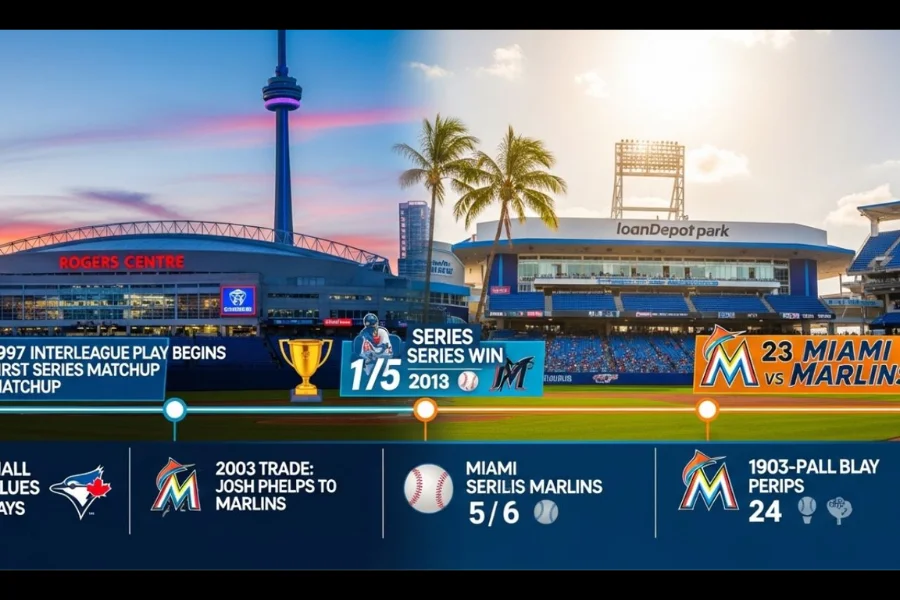
Miami’s LoanDepot Park creates a very different experience. The stadium has a larger outfield than many ballparks. That means fly balls that might be home runs in Toronto often become deep outs in Miami. Pitchers benefit from that extra space. They can challenge hitters more confidently, knowing the stadium provides a safety margin. Another factor is Miami’s climate. Humidity and warm air can affect how the baseball moves. Pitchers sometimes find their breaking pitches behave differently in this environment.
The result is often lower-scoring games. Fans may see more pitching battles and fewer home runs when Toronto visits Miami. For hitters, patience becomes important. Instead of swinging for long balls, they may focus on base hits and smart base running. This contrast between stadiums adds an interesting twist to the Toronto Blue Jays vs Miami Marlins timeline. The same teams can produce completely different games depending on the location.
Environmental Factors Affecting Game Outcomes
Beyond stadium size, several environmental factors influence baseball games. Temperature, humidity, and even altitude can affect how the ball travels. For example, warm air tends to help baseballs travel farther. Cooler air can reduce distance. Humidity can also influence grip for pitchers. In Toronto, the controlled environment of Rogers Centre removes many weather variables. The roof can close, keeping conditions stable. In Miami, outdoor humidity and warm temperatures create a different feel.
Players must adjust quickly. Sports science research discussed across analytics platforms shows that these environmental differences can affect pitching velocity, ball movement, and player endurance. Even small changes can impact a game. For example, a pitcher’s slider might break differently in humid air compared to dry indoor conditions. Fans might not notice every detail, but players definitely feel the difference. These subtle environmental changes add another layer to the Blue Jays vs Marlins timeline.
The Future of Blue Jays vs Marlins Matchups
Increasing Interleague Games in Modern MLB Scheduling
Major League Baseball scheduling has changed a lot in recent years. In the past, teams from different leagues rarely played each other. That meant matchups like Toronto vs Miami happened only occasionally. Today, MLB is moving toward more balanced scheduling. Each team now faces opponents from the other league more often. The goal is simple: give fans more variety. Sports industry coverage, including reports referenced by outlets like Forbes, explains that balanced scheduling increases fan engagement and television interest.
For the Toronto Blue Jays vs Miami Marlins timeline, this means more chapters are coming. Instead of waiting several seasons between matchups, fans may see these teams meet regularly. That consistency could eventually build a stronger connection between the teams. Players also benefit. Facing more opponents helps them grow and adapt. Baseball thrives on variety, and expanded interleague play provides exactly that.
Young Stars Who Could Shape Future Meetings
Every baseball generation introduces new stars. For the Blue Jays, the team has built a core of talented young players who combine power and athleticism. For the Marlins, pitching development and speed remain key strengths. These young players will likely shape the next chapters of the Toronto Blue Jays vs Miami Marlins timeline. Fans love watching rising stars face off.
Imagine a powerful young hitter stepping into the batter’s box against a fast-throwing rookie pitcher. Neither player knows exactly what will happen. That tension creates excitement. Baseball history shows that many rivalries begin this way—through repeated battles between talented players. As these athletes gain experience, their matchups become even more meaningful. Each new season adds more storylines and memorable moments.
Possibility of a First Postseason Clash
One thing has never happened in the Toronto Blue Jays vs Miami Marlins timeline.The teams have never met in the playoffs. That possibility adds an intriguing “what if” scenario for baseball fans. If both teams reach the postseason during the same year, they could eventually meet in the World Series. That would instantly transform their matchup. Regular-season games are exciting. But postseason baseball carries much higher stakes.
Every pitch matters. Every run can decide a season. Imagine the energy if Toronto’s national fan base faced Miami’s passionate South Florida crowd in a championship series. It would be one of the most unique World Series matchups in MLB history. While there’s no guarantee it will happen, the possibility keeps fans interested. And if it ever does happen, it would instantly become the biggest moment in this timeline.
Final Words
The Toronto Blue Jays vs Miami Marlins timeline shows that baseball excitement doesn’t always require a long-standing rivalry. Even though these teams play in different leagues and meet only occasionally, their games often deliver memorable moments. From early interleague matchups in the late 1990s to dramatic extra-inning battles in recent seasons, each series has added something new to their shared history.
What makes this matchup interesting is the unpredictability. Players face opponents they rarely see. Pitchers must adjust quickly, and hitters study unfamiliar styles. That challenge often leads to surprising results and close games.
Ballpark differences also shape these contests. Toronto’s hitter-friendly Rogers Centre can produce high-scoring action, while Miami’s LoanDepot Park often favors pitchers and tighter games. Add in young stars, evolving MLB schedules, and the possibility of more frequent interleague meetings, and the future looks promising for this matchup.
One day, these teams could even meet in the postseason. If that happens, the timeline would gain its biggest chapter yet. In baseball, every rare matchup can create unforgettable moments—and Toronto vs Miami proves it.
Welcome to Twirl N Shape — Discover, Explore, and Enjoy