
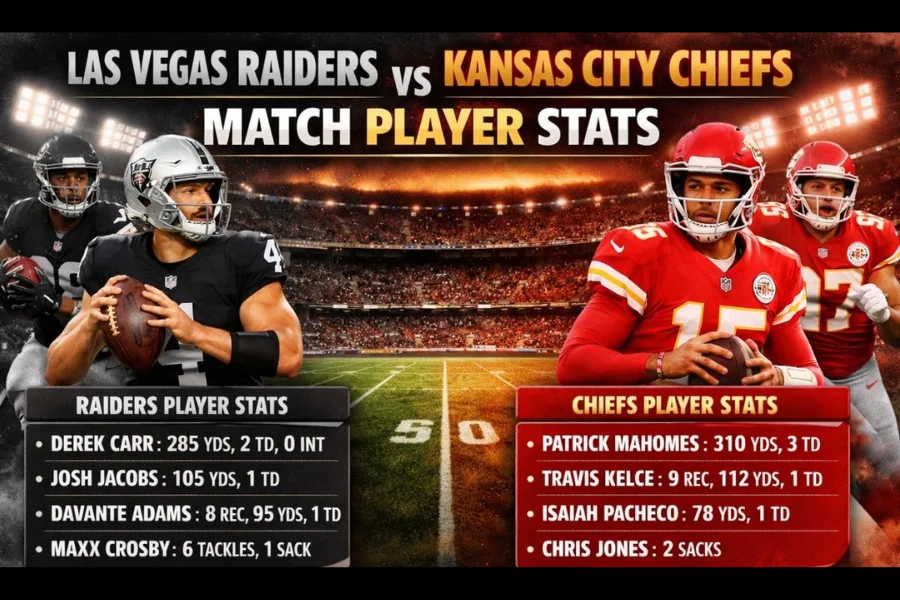

The Las Vegas Raiders vs Kansas City Chiefs match player stats from Week 18 showed how tight division games can be. This matchup was played in the final week of the regular season at Allegiant Stadium. Both teams entered the game with pride on the line and young players looking to prove themselves. The final score stayed close throughout because defense and special teams controlled most of the action. Instead of a high-scoring offensive battle, fans saw pressure, field goals, and smart clock management. Every drive felt important because one mistake could change the result. In the end, the game came down to execution in key moments. The Raiders managed to finish stronger and secure a narrow victory. This game became another memorable chapter in a long-standing rivalry between two competitive AFC West teams.
Game Overview and Final Score
Date, Stadium, and Week 18 Context
This game took place on January 4, 2026, at Allegiant Stadium in Las Vegas. Week 18 games usually carry playoff implications or evaluation importance for teams. Even if playoff spots are already decided, players still compete hard for roster positions and future opportunities. Division matchups like this one always feel more intense because teams know each other well. Coaches prepare detailed game plans based on previous meetings and tendencies. The atmosphere inside the stadium reflected rivalry energy and competitive pride. Fans expected a strong performance from both sides. For the Raiders, winning at home against a division rival meant finishing the season on a positive note. For the Chiefs, maintaining dominance in the division was important. That added motivation increased pressure on both teams from the opening kickoff.
Final Score: Raiders 14 – Chiefs 12
The final score ended at Raiders 14 and Chiefs 12. It was not an offensive shootout but instead a defensive battle decided by small margins. Both teams struggled to convert drives into touchdowns. Most scoring opportunities came from field goals rather than red zone efficiency. The Chiefs scored early and stayed competitive throughout the game. The Raiders responded slowly but consistently kept the game within reach. In the final seconds, a long field goal attempt changed everything. Daniel Carlson connected from 60 yards to give the Raiders the lead as time expired. That single kick determined the outcome. The narrow margin shows how evenly matched the teams were statistically. Turnovers, pressure, and special teams performance had a bigger impact than total yardage.
Why This Matchup Mattered for Both Teams
This matchup mattered because division games affect standings and long-term momentum. Even late in the season, rivalry games carry emotional value. Players want bragging rights and confidence going into the offseason. The Raiders needed a strong finish to build trust in their system and coaching staff. Beating the Chiefs added credibility to their performance. The Chiefs wanted to protect their reputation as division leaders. Losing a close game highlights areas that need improvement before postseason play. Player evaluations also become important during Week 18. Coaches analyze individual stats carefully to decide future roles. According to analytics discussions from sports coverage platforms between 2023 and 2025, teams use detailed performance data when planning roster decisions. That means this game influenced more than just the final score.
Short Recap of How the Game Unfolded
The game started with defensive intensity on both sides. Kansas City scored first through field goals and controlled early momentum. The Raiders struggled to establish rhythm on offense because of pressure and disrupted passing plays. As the game progressed, both teams adjusted strategies. Running plays became more frequent to reduce risk. Field goals replaced touchdown attempts as defenses tightened near the red zone. The score remained close throughout three quarters. In the fourth quarter, Kansas City briefly took the lead again. However, the Raiders mounted a final drive that positioned them for a long field goal attempt. Daniel Carlson converted the kick and secured victory. The entire game reflected balance and discipline rather than explosive scoring.
Quarter-by-Quarter Score Breakdown
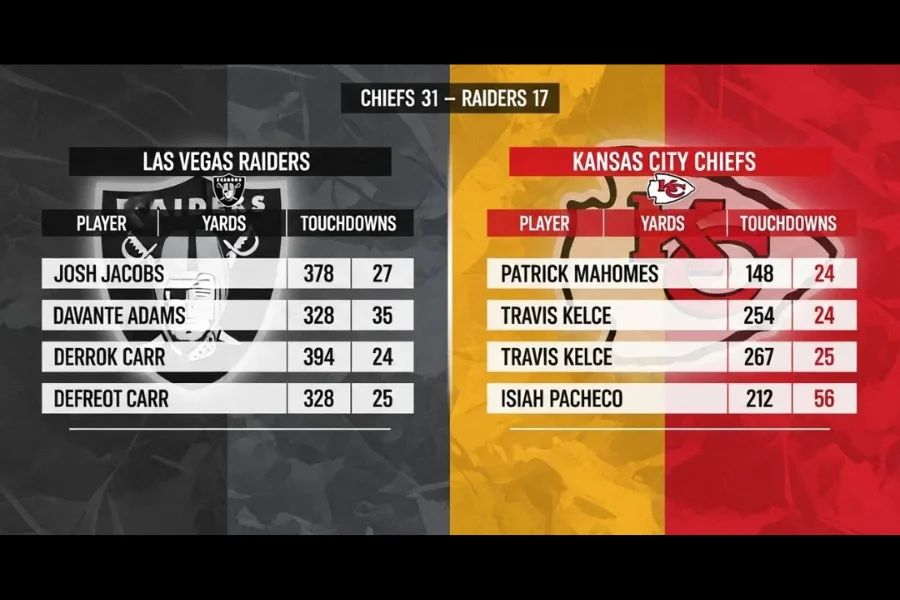
First Quarter – Chiefs Take an Early Lead
The first quarter showed Kansas City controlling tempo early. Their offense moved efficiently into scoring range through short passes and safe play calling. Instead of forcing deep throws, they relied on consistent completions to advance downfield. That approach resulted in a successful field goal. The Raiders offense struggled to respond because the Chiefs defensive line generated pressure quickly. Quarterback protection broke down on several plays, limiting passing options. Running attempts helped slow the pass rush but did not produce large gains. Early momentum favored Kansas City, but the lead remained small. No team separated significantly. The quarter proved that strong defensive starts can influence confidence early in a game.
Second Quarter – Defensive Battle Continues
The second quarter turned into a physical defensive battle. Both teams focused on stopping big plays and forcing opponents into long third-down situations. Raiders running back Ashton Jeanty gained steady yards to keep drives alive. Short passes across the middle also helped move the chains. Kansas City responded with strong red zone defense, forcing field goal attempts instead of touchdowns. Quarterbacks faced heavy pressure from defensive linemen and blitz packages. Sacks reduced offensive efficiency and forced quick decisions. Time of possession became critical because longer drives limited scoring chances. By halftime, the scoreboard remained tight. Neither team gained a clear advantage. The defensive intensity defined the first half completely.
Third Quarter – Field Goals Keep the Game Tight
The third quarter followed a similar pattern with limited offensive breakthroughs. Both teams reached scoring territory but struggled to finish drives with touchdowns. Kickers became the primary point scorers again. Harrison Butker added field goals for Kansas City, while Daniel Carlson responded for the Raiders. These kicks kept the score separated by only a few points. Offensive coordinators adjusted play calling to protect quarterbacks from constant pressure. Short yardage plays replaced deep passing attempts. The game felt strategic and cautious. Defenses remained dominant across the field. Because neither team created explosive plays, the scoreboard changed slowly. This quarter highlighted how important efficiency becomes when defenses control the action.
Fourth Quarter – Late Drama and the Game-Winning Kick
The fourth quarter delivered the most excitement. Kansas City briefly regained the lead through another successful field goal. At that moment, pressure shifted toward the Raiders offense. They needed a strong final drive to stay competitive. Quarterback Aidan O’Connell managed the clock carefully and completed short passes to move into field goal range. Running plays reduced risk and kept the defense guessing. With seconds remaining, the coaching staff trusted Daniel Carlson for a long-distance attempt. The 60-yard field goal required accuracy and power. Carlson delivered perfectly, sending the ball through the uprights as time expired. That moment defined the game. It proved that preparation and confidence matter in high-pressure situations.
Las Vegas Raiders Player Stats and Key Performances
Passing Stats – Aidan O’Connell
Aidan O’Connell led the Raiders passing attack in this matchup. He completed 10 of 22 passes for 102 yards with no touchdowns and no interceptions. While those numbers may not look impressive at first glance, context matters. The Chiefs defense applied consistent pressure, forcing quick throws and limiting deep passing opportunities. O’Connell focused on safe decisions instead of risky downfield attempts. That approach reduced turnover chances and kept the offense stable. He absorbed several sacks but avoided costly mistakes that could shift momentum. In close defensive games, protecting the football is often more important than producing big yardage. His performance reflected game management rather than explosive production. Coaches usually value quarterbacks who understand situational football. This game showed that controlled execution can still lead to victory even without high statistical output.
Rushing Stats – Ashton Jeanty and the Ground Game
Ashton Jeanty played a major role in the Raiders offense through the running game. He carried the ball 26 times for 87 yards, leading the team in rushing attempts and yardage. His workload demonstrated trust from the coaching staff. Running the ball consistently helped the Raiders control clock time and reduce pressure on the quarterback. Even though he did not score a rushing touchdown, his steady gains kept drives alive. Many of his runs came on early downs to set up manageable third-down situations. Physical runs against a strong defensive front require effort and balance. Jeanty showed patience by waiting for gaps to open before accelerating through contact. Ground control became a key strategy for Las Vegas. In tight games like this, running success directly influences field position and scoring chances.
Receiving Leaders and Key Targets
The Raiders receiving group contributed important yardage when needed. Davante Adams stood out as a reliable target, recording key receptions that moved the chains. His ability to win contested catches helped the offense avoid stalled drives. Short and intermediate routes became the primary passing strategy because of defensive pressure. Other receivers also contributed with shorter gains across the middle and sideline routes. These completions created space for the running game to operate effectively. Although there were no explosive touchdown receptions, consistency mattered more. Each catch improved field position and extended possessions. Timing between the quarterback and receivers played a crucial role. In defensive matchups, receivers must adjust quickly to coverage changes. The Raiders passing group delivered steady production even without big highlight plays.
Defensive Standouts – Tyree Wilson and Raiders Defense
The Raiders defense played one of the most important roles in securing victory. Tyree Wilson created consistent pressure on the quarterback and disrupted multiple passing attempts. His ability to break through blocks forced hurried throws and incomplete passes. Defensive linemen worked together to collapse the pocket and limit deep plays. The secondary stayed disciplined in coverage and prevented big receptions downfield. Several key stops inside the red zone forced the Chiefs to settle for field goals. Defensive execution reduced scoring opportunities and kept the game close. Turnovers also played a role in shifting momentum during critical moments. When defenses generate pressure and stop touchdowns, they directly increase winning chances. This performance showed strong communication and teamwork across the defensive unit.
Kicking Performance – Daniel Carlson’s Game Winner
Daniel Carlson became the hero of the game with his incredible 60-yard field goal. He successfully converted multiple kicks throughout the matchup before attempting the final long-distance shot. Kicking from 60 yards requires strong leg power, accuracy, and confidence. Many kickers miss attempts from that distance under pressure. Carlson remained calm and focused despite the high stakes. The snap and hold were clean, and the ball traveled perfectly through the uprights. His performance demonstrates how special teams can decide outcomes in close games. Reliable kicking gives coaches confidence to attempt long-range field goals when necessary. Without that final kick, the result could have gone the other way. Special teams often receive less attention, but this game proved their importance clearly.
Kansas City Chiefs Player Stats and Key Performances
Quarterback Stats – Chiefs Passing Production
The passing attack generated yardage but struggled to finish drives with touchdowns. Pressure from the Raiders defense limited deep throwing opportunities. Quick reads became necessary to avoid sacks and turnovers. Completion percentage remained solid, but red zone efficiency dropped during key moments. The quarterback distributed the ball to multiple receivers to create balance. However, strong coverage prevented explosive plays. In close games, converting third downs into touchdowns becomes essential. Kansas City moved the ball effectively at times but failed to capitalize consistently inside scoring territory. This statistical performance highlights how defensive pressure can disrupt even experienced quarterbacks.
Rushing Leaders and Running Game Impact
The Chiefs running game contributed moderate yardage but did not dominate the contest. Running backs gained steady short gains to support passing situations. However, the Raiders defensive front limited explosive rushing plays. Most runs resulted in small yardage instead of large breakaway gains. The running attack helped control tempo but failed to generate touchdowns. Establishing the run usually opens passing lanes later in games. In this matchup, defensive resistance prevented that strategy from fully succeeding. Successful rushing plays often came on designed gaps or misdirection plays. Even without massive numbers, the running game played a supporting role in maintaining balanced offensive drives.
Receiving Leaders Including Travis Kelce
He recorded multiple receptions and gained valuable yardage across intermediate routes. His experience allowed him to find soft spots in coverage. Defenders focused heavily on limiting his impact because of his ability to create separation. Other receivers contributed through short and medium-range catches. However, consistent coverage prevented major explosive plays. Kelce’s involvement helped sustain drives but did not translate into touchdowns. The receiving group showed discipline but faced strong defensive resistance. In rivalry games, opponents often prioritize stopping key playmakers. That defensive focus shaped the overall receiving production for Kansas City.
Defensive Contributions and Sacks
The Chiefs defense applied pressure throughout the game. Defensive linemen recorded sacks and forced difficult throwing decisions. Their ability to disrupt the Raiders passing attack limited offensive rhythm. Tackles for loss and quarterback hits slowed down drive progression. Defensive backs provided tight coverage and limited deep passing opportunities. Even when the Raiders moved into scoring position, defensive stops forced field goals instead of touchdowns. Turnovers played a role in changing momentum at key moments. Defensive performance kept the score competitive until the final seconds. Strong defense remains essential in division matchups where offensive talent is balanced.
Special Teams – Harrison Butker’s Field Goals
Harrison Butker played a crucial role for Kansas City by converting multiple field goals. His accuracy kept the Chiefs competitive on the scoreboard. When drives stalled near the red zone, his kicks ensured points were still added. Special teams execution helped maintain a narrow lead for portions of the game. Field goal reliability is extremely important in defensive battles. Butker demonstrated consistency under pressure and delivered when called upon. However, despite his strong performance, the team could not secure the win. This shows that kicking success alone does not guarantee victory. Offensive and defensive support must work together.
Complete Team Stats Comparison
Total Offensive Yards
Both teams finished the game with relatively balanced total offensive production. The Chiefs often generated more passing yards, especially through short and intermediate throws that moved the chains steadily. The Raiders combined their rushing attack with controlled passing to match that output. When you look at total yardage alone, the numbers show how close the game remained from start to finish. Neither team dominated the other statistically. Drives frequently ended around midfield or inside field goal range instead of producing touchdowns. That explains why scoring stayed low throughout the matchup. Total offensive yards reflect how far teams moved the ball, but they do not always show scoring efficiency. Defensive pressure forced both offenses into shorter plays and safer decisions. Because of that, explosive gains were limited. The comparison proves that this contest was competitive and evenly matched in terms of overall production.
Passing Yards vs Rushing Yards
Kansas City produced stronger passing numbers compared to their rushing output. Their offensive strategy leaned heavily on quarterback throws, quick releases, and short routes designed to avoid pressure. However, consistent defensive disruption reduced the impact of deep passing plays. The Raiders showed a more balanced offensive approach by mixing rushing attempts with controlled passing situations. Their ground game played an important role in keeping drives alive and reducing risk. Rushing yards helped both teams manage tempo and avoid turnovers. In close games like this, balance often creates stability because it prevents defenses from predicting every play. Passing attempts increase scoring potential, but rushing production controls the clock and limits mistakes. This matchup demonstrated how teams adjust based on defensive strength. The final numbers reflect different offensive identities but similar overall effectiveness under pressure.
Time of Possession
Time of possession played a significant role in shaping momentum during this game. The team that controlled the ball longer created more scoring opportunities and limited the opponent’s chances. The Raiders relied on their running game to extend drives and maintain longer possession sequences. By doing so, they forced Kansas City to stay on the sidelines and defend repeatedly. The Chiefs responded with efficient but shorter drives that did not always consume much clock time. Controlling possession reduces defensive fatigue and increases pressure on the opposing offense to score quickly. In tight matchups, even a small advantage in possession time can influence the outcome. Longer drives also allow teams to adjust play calls based on defensive reactions. Overall, possession management became one of the key strategic factors that affected scoring balance and late-game opportunities.
Turnovers and Penalties
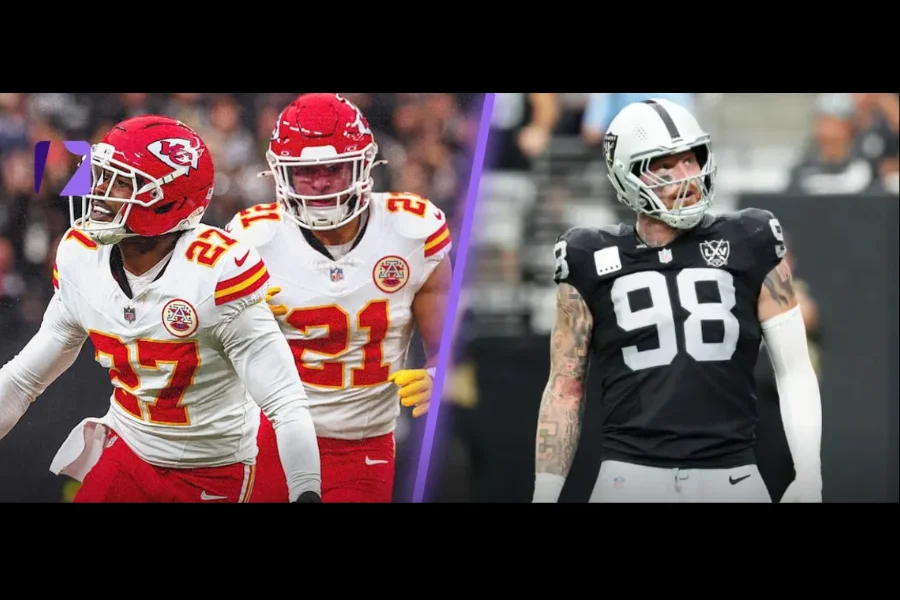
Turnovers remained limited in this matchup, but every possession carried high value because scoring chances were scarce. Avoiding interceptions and lost fumbles became essential for both teams. Even one turnover could have shifted momentum dramatically in a close game like this. Defensive units focused on creating pressure and forcing mistakes, but quarterbacks generally protected the ball well. Penalties also influenced offensive drives by creating long-yardage situations. A single flag can change play calling and force teams into riskier third-down scenarios. Discipline mattered because unnecessary penalties stalled momentum and reduced scoring efficiency. Teams that minimized mistakes gained small advantages in field position and clock control. In rivalry games, attention to detail often separates winners from losers. The limited turnovers and manageable penalty numbers show that both teams played carefully, understanding how one error could decide the final result.
Defensive Battle and Game-Changing Plays
Key Sacks and Quarterback Pressure
Defensive pressure defined much of this matchup from start to finish. Both teams recorded sacks that disrupted offensive rhythm and forced hurried decisions. Pass rushers attacked the pocket aggressively, limiting time for quarterbacks to scan the field for open receivers. When pressure increases, passing accuracy usually drops and play timing breaks down. Sacks also created long-yardage situations that reduced conversion chances on third down. Defensive linemen and blitz packages played a major role in shaping the tempo of the game. Quarterbacks had to release the ball quickly or absorb contact from defenders closing in fast. That constant pressure prevented explosive passing plays from developing consistently. Strong defensive line performance directly affected scoring opportunities. Because both defenses generated disruption, the game remained competitive and low scoring throughout.
Red Zone Stops and Defensive Efficiency
Red zone defense became one of the most important factors in determining the outcome. When offenses reached scoring territory inside the 20-yard line, defenses tightened coverage and increased pressure intensity. Stopping touchdowns forced teams to settle for field goals instead of seven-point drives. That difference significantly impacts close games. Defensive efficiency inside the red zone requires strong communication, disciplined coverage, and effective pass rush timing. Both teams showed resilience by limiting touchdown conversions when opponents approached scoring range. Those critical stops prevented either side from building a comfortable lead. Red zone efficiency often determines whether a team wins by small margins or loses despite strong yardage production. In this matchup, defensive strength inside scoring territory helped keep the final score extremely close.
Turnovers and Momentum-Shifting Plays
Turnovers always have the potential to shift momentum instantly. In this game, both teams avoided major turnover disasters, which kept the contest balanced. However, small defensive plays such as forced incompletions, pass breakups, and near-interceptions created pressure moments. Even when turnovers did not happen frequently, the threat of them influenced play calling. Coaches became more conservative in risky situations to protect possession. Momentum swings often occur after big defensive stops or key special teams plays. Those moments energize teams and change crowd energy. Although turnovers were limited, their potential impact remained high throughout the matchup. Protecting the football allowed both teams to stay competitive until the final seconds. Ultimately, disciplined ball security helped determine which team survived the pressure and executed better in critical situations.
Special Teams Impact on the Final Result
Field Goal Accuracy and Longest Kicks
Field goal accuracy played a huge role in deciding this matchup. Because touchdowns were hard to score, both teams relied heavily on their kickers to put points on the board. Every successful field goal shifted momentum and kept the scoreboard moving. The longest successful kick became the most memorable moment of the game. Long-distance attempts require strong leg power, precise timing, and perfect execution from the snap to the hold. Under pressure, many kickers struggle to convert from extreme range. However, both kickers stepped up and delivered important points. Accuracy from distance gave coaches confidence to attempt longer field goals instead of punting or taking risky fourth-down plays. In tight defensive games, reliable kicking often separates winners from losers. The ability to convert long-range opportunities directly influenced the final outcome.
Punt and Kick Return Field Position
Field position after punts and kickoffs significantly impacted offensive starting points throughout the game. Good return plays allowed teams to begin drives closer to midfield, creating better scoring opportunities. Poor returns forced offenses to start deep in their own territory, increasing the difficulty of driving down the field. Special teams coverage units worked hard to limit explosive returns and maintain control over positioning. Even small yardage gains on returns made a difference because every extra yard reduces the distance needed to reach field goal range. Coaches pay close attention to starting field position when planning offensive strategies. Better positioning allows teams to call more aggressive plays early in drives. In this matchup, field position battles contributed to the overall defensive tone of the game and shaped possession outcomes.
How Special Teams Decided the Game
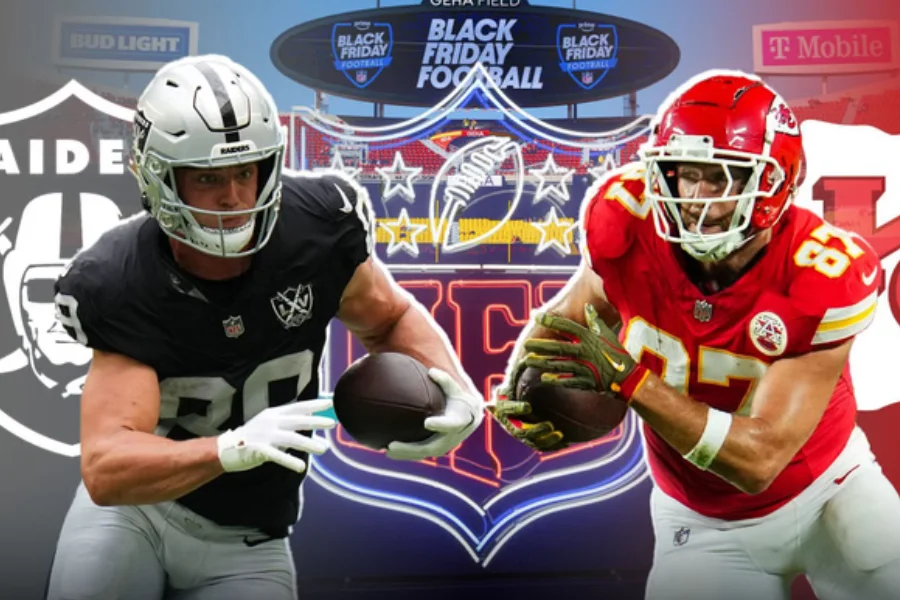
Special teams ultimately played a decisive role in determining the winner. With offenses struggling to score touchdowns consistently, field goals became the primary scoring method. The team that executed better in kicking situations gained the advantage on the scoreboard. The game-winning kick proved how powerful special teams performance can be in close contests. Without accurate long-distance kicking, neither team would have reached the final score they achieved. Special teams units also influenced momentum through coverage tackles and disciplined execution. Many fans focus on offense and defense, but this matchup clearly demonstrated that special teams matter just as much. A single successful kick can change the entire result of a rivalry game. That reality became the defining factor in this Week 18 battle.
Top Performers From the Game
Best Raiders Players of the Match
Several Raiders players delivered strong performances that directly contributed to the victory. Ashton Jeanty led the rushing attack with consistent yard gains and heavy workload responsibility. His ability to convert short-yardage situations kept drives alive and reduced pressure on the passing game. On defense, Tyree Wilson created constant disruption through pressure and aggressive pass rush moves. His impact affected quarterback timing and forced rushed decisions. Special teams hero Daniel Carlson became the standout performer with his clutch long-distance field goal. These key contributions combined to create balanced team success. Each unit — offense, defense, and special teams — produced important plays at different moments. The performance of these top players shows how teamwork across positions leads to victory in tight games.
Best Chiefs Players of the Match
For the Chiefs, several players performed well despite the narrow loss. Harrison Butker provided reliable scoring through multiple successful field goals that kept the team competitive. His accuracy ensured that drives ending near the red zone still produced points. Tight end Travis Kelce remained a primary target in the passing attack and delivered important receptions that moved the chains. Defensive pass rushers also stepped up with sacks and quarterback pressure that limited the Raiders offense. These performances highlight how individual effort kept Kansas City within reach throughout the game. Even though the final result did not favor them, key players showed consistency and competitiveness. Strong individual stats reflect determination and execution under pressure.
Rookie and Backup Players Who Stepped Up
Week 18 often provides opportunities for backup players and rookies to gain meaningful playing time. In this matchup, several younger players stepped into larger roles due to rotations or strategic adjustments. Some contributed through crucial tackles, short-yardage runs, or important receptions that extended drives. Others gained experience by facing live-game pressure against division opponents. These opportunities matter for future development and roster evaluation. Coaches closely analyze performance from depth players to determine long-term potential. Stepping up in a rivalry game adds value to a player’s resume. Even if their contributions do not appear heavily in the stat sheet, execution in key moments builds trust with coaching staff. This game served as an important evaluation platform for emerging talent.
Key Milestones and Notable Records
Travis Kelce’s Career Milestones
Travis Kelce continued adding impressive numbers to his career record during this game. Each reception and yard gained contributes to his long-term statistical achievements. Reaching additional milestones strengthens his position among the league’s elite tight ends. Even in a game where the offense struggled to score touchdowns, Kelce remained an important target. His consistency over multiple seasons demonstrates durability and high-level performance. Career milestones matter because they reflect sustained excellence rather than single-game production. Defenders often focus heavily on limiting his impact, yet he still manages to produce meaningful contributions. This matchup added another chapter to his legacy and statistical growth within the league.
Daniel Carlson’s Longest Field Goal Moment
Daniel Carlson’s 60-yard field goal became one of the most memorable highlights of the game. Long-distance field goals require confidence, strong technique, and perfect execution from the entire special teams unit. The snap must be clean, the hold steady, and the kick accurate under pressure. Attempting such a long kick at the end of a close game shows trust from the coaching staff. Successfully converting it demonstrates elite ability. That single kick directly decided the final outcome and created a highlight moment for fans. Long field goals are rare but impactful. Carlson’s performance proved that preparation and calm focus lead to success in critical situations.
Other Individual Achievements from the Game
Beyond the headline performers, several players achieved personal milestones during the matchup. Defensive players recorded season-high tackle numbers. Some offensive players reached new yardage benchmarks. Others secured contract-impacting statistics through strong performance. These achievements may not always dominate media coverage, but they matter for player evaluation. Teams track individual progress closely during final-season games. Strong performances increase confidence heading into the offseason. Personal milestones also reflect hard work and improvement throughout the year. Every contribution adds value to overall team development.
What the Player Stats Reveal About the Game
The player statistics clearly show that defense and special teams played bigger roles than offensive dominance. Neither team produced overwhelming yardage totals, and touchdowns remained limited. The Raiders won because they executed better in critical situations and trusted their kicker in the final moment. The Chiefs stayed competitive but failed to convert enough scoring opportunities into touchdowns. Pressure, field position, and kicking accuracy created small advantages that determined the winner. The numbers demonstrate how balanced competition often results in close finishes. This game proves that efficient execution matters more than flashy statistics. Small improvements in key areas can change the final outcome.
Raiders vs Chiefs Rivalry Context
Brief History of the Rivalry
The Raiders and Chiefs rivalry dates back decades within the AFC West division. Both teams share a long history of competitive matchups filled with physical play and strong fan support. Over time, this rivalry has produced memorable games and dramatic finishes. Division pride increases intensity whenever these teams meet. Historical competition adds emotional weight to each new matchup. Players understand that winning against a rival carries extra significance beyond standings. This background explains why every encounter feels important and highly contested.
Previous Matchup Results
Previous meetings between the Raiders and Chiefs have produced alternating results. Some games ended in high-scoring shootouts, while others followed defensive patterns similar to this contest. The unpredictability of outcomes makes the rivalry exciting for fans. Each season brings new roster changes and strategic adjustments that affect performance. Historical results show that no team consistently dominates every matchup. That competitive balance keeps future games unpredictable and engaging.
Why These Games Are Often Close and Physical
Division familiarity contributes to physical and closely contested games. Teams study each other extensively and understand preferred strategies and tendencies. That preparation leads to adjustments and counter-adjustments during gameplay. Physical intensity increases because players compete for division positioning and pride. Close scores frequently result from strong defensive awareness and strategic play calling. Rivalry games often come down to discipline, execution, and clutch performance. This matchup followed that pattern perfectly.
Final Words
The biggest lesson from this game is that execution in key moments determines victory. The Raiders succeeded because they remained disciplined, trusted their defense, and relied on special teams when needed. The Chiefs competed strongly but missed crucial opportunities to convert drives into touchdowns. Defensive pressure and field goal accuracy defined the outcome more than offensive yardage totals. Players who performed well improved their evaluation for future roles. This game demonstrated how rivalry matchups rarely produce easy wins. Every possession and every kick matters until the final whistle.
Stay strong, confident, and empowered with Twirl n Shape Pole Fitness.